Anabelle Smith
Anabelle shares her experiences with her menstrual cycle, hormonal contraception and body image.
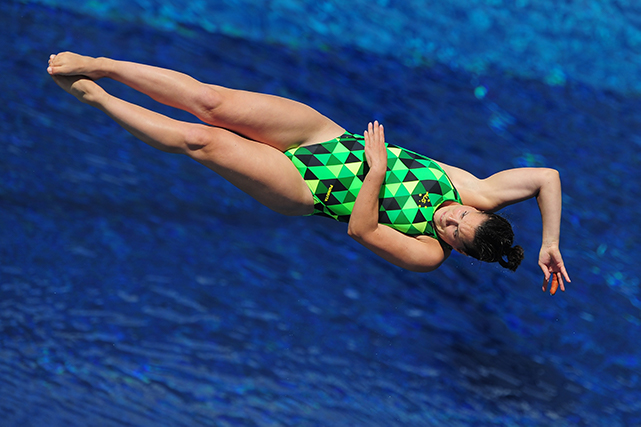
Anabelle Smith
Diving
Anabelle shares her experiences with her menstrual cycle, hormonal contraception and body image.
Anabelle Smith was juggling her Year 12 studies and final preparations for her Commonwealth Games diving debut in Delhi in 2010 when, at a pre-event training camp in China, the 17-year-old menstruated for the first time.
“So that was interesting,’’ recalls Anabelle, now 28. “I was away from home, didn’t have my mum around, but thankfully had some older senior athletes to help me out.
“I’ve been pretty lucky that, ever since, my period’s been pretty regular and relatively ‘normal’. But it’s definitely still something I’ve had to monitor - and it’s had its challenges.’’
That has included, at 19, blindly following a doctor’s recommendation to start taking the contraceptive pill in order to manage her menstrual cycle, and enable her to skip a period if it was due to arrive during a competition.
Issue one: the side-effects, including depressed mood and heightened emotions at training. Issue two: severe stomach pains that saw her taken to hospital, where a blood clot was discovered. Anabelle has not taken the pill since.
“Personally, now, I just prefer not to put anything artificial like that into my body, and because I’ve usually had a regular period, it’s been easy for me to work around it, but that’s not always the case for everybody.’’
Nor has it always been so for Anabelle, who has suffered from amenorrhea - or absence of menstruation - a couple of times when her body fat has dipped below what the Rio Olympics bronze medallist now recognises as healthy levels.
She has seen and heard from fellow athletes that failing to menstruate is viewed as a positive because it’s an indicator of weight loss. She knows that is worryingly false.
“As you get older you understand that’s actually really dangerous, and it’s really good that I’ve found the right weight and power ratio that has allowed me to maintain a normal menstrual cycle,’’ says Anabelle.
“But for younger kids it’s a risky area to get into - especially if it’s not monitored and they’re not being honest with their support team. It can take a little bit of time to understand what’s normal and what’s not normal.’’
For half the population, menstruating is what’s normal. So, often, are pre-menstrual symptoms, with Anabelle needing to manage mood swings, fatigue and an increased appetite, but supported throughout by her coach, Andy Banks.
“I can communicate to him if I’m having cramps, or I’m just not feeling energised - he doesn’t ask too many questions, but he understands, and we work around my training program like that,’’ says Anabelle.
“It does become a little bit more stressful if it’s in and around competition … if I know that my period’s going to fall on a competition day, that’s not best-case scenario! My day one might be I’ve got period cramps or stomach pains or whatever, but after that I’m generally fine, so it’s tricky.’’
Which is all part of why education is essential, and the ideal outcome is that this type of story will not be necessary in five years. But, for now, as they say, you don’t know what you don’t know.
This is the time to find out, though, for more girls are reaching puberty earlier, and in aesthetically-influenced sports like diving and gymnastics, sleek swimsuits and leotards mean there is nowhere to hide a changing body composition, however natural that may be.
“I feel for the younger kids, who probably aren’t as comfortable with their bodies and what’s going on, let alone having to be in bathers all the time,’’ says Anabelle, a triple Commonwealth Games medallist on top of her Rio podium finish with Maddison Keeney in the 3-metre springboard synchro.
“It is difficult. A lot of divers start when they’re pre-pubescent and then they go through puberty whilst training and being in bathers, so there is an understanding from coaches and administrators and senior athletes that it’s a normal thing to go through puberty, and it’s a normal thing to gain extra body fat when you’re an adolescent.
“But to go through it yourself can be really challenging. There’s mirrors and people everywhere and your dives are on video.
“I definitely went through those insecurities and being super self-conscious, but it helps once you gather an understanding and appreciation that everyone’s going through the same thing.
“It’s important just having positive role models around who encourage people to embrace their bodies and their differences. But it can be a tough period when you’re still learning that.’’