Laura Harding
Laura was faced with a decision - be an athlete or live a so-called ‘normal’ life.
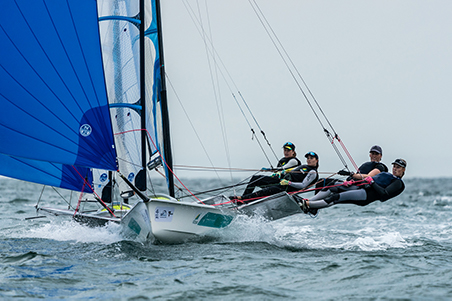
Laura Harding
Sailing
Laura was faced with a decision - be an athlete or live a so-called ‘normal’ life.
Laura Harding was 16 when she realised that, as she puts it, there was “something a little bit off”. Unlike her friends, she was not menstruating. Never had. Her local GP ordered some basic tests, then told Laura to wait until she was 18.
By then, still nothing had changed for the 2018 world junior sailing champion. During that next consultation, the doctor told her that it was all OK. Just part of being an athlete. Come back when you turn 21.
“But at 19 I was like ‘OK, this really isn’t right’,’’ Laura recalls. “So I went to a female ultrasound place and they basically said ‘you don’t have a uterus’.’’
Really? Could that even be possible? To this day, the Sydney-based Melburnian is yet to meet anyone who has heard of the condition - Mayer-Rokitansky-Küster-Hauser syndrome - that affects just one in 5000 females.
The next step was to work out how, apart from the obvious and distressing reproductive consequences, it would affect her life and what, if anything, could be done.
“I’m still seeking answers, really,’’ says Laura, now 21, a Victorian Institute of Sport scholarship-holder and Australian sailing squad member whose Olympic sights are on Paris 2024 in the International 49erFX Class.
“It was a bit of a shock to the system. I have ovaries, so the only thing that’s different is that I don’t have a period. I assume that I have normal hormone-level fluctuations and that everything else functions the same, but that’s what we’re trying to investigate. It’s a bit of a work in progress at the moment.’’
Laura and the VIS medical team are assessing the impact on training and competition of not knowing - without the usual signs - what stage of the menstrual cycle the young athlete is at in any given time.
They hope to establish a monthly baseline fluctuation level in the young athlete’s hormones to use as a measuring tool, then use the information most advantageously.
“It’s just something to take into consideration; knowing how you’re going to be influenced by certain training days and sometimes you might get some mood swings or be a little bit more frustrated than usual,’’ Laura says.
“I think nutrition is a big part of it as well - knowing how much support your body needs at certain times.’’
Laura is trying to look at the positives - admitting with a laugh that never having a period is one of them. But she gets quietly emotional when discussing the impact of such a rare condition.
“I guess I went through a stage where it was really hard to know what my future was going to look like,’’ she says.
“So experiencing my diagnosis in some ways made me assess what all my goals are in sailing and kind of solidify where I want to take my athletic career and what I want to achieve.
“It was a big turning point in my life where I had to really decide whether I wanted to be an athlete or live a so-called ‘normal’ life.’’
Laura the athlete won. Not for the first time. Or, one suspects, the last.