Sport Integrity Australia
The Best and Fairest - David Sharpe APM OAM, CEO, Sport Integrity Australia
Case Study
Sport Integrity Australia
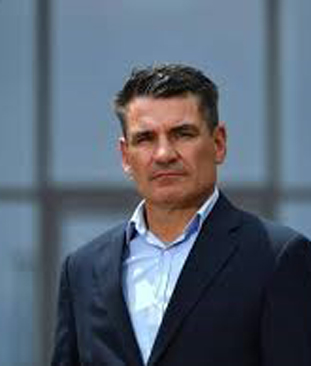
David Sharpe APM OAM, CEO Sport Integrity Australia
The Best and Fairest
"Our role to make sure sports understand the requirements of policies and to help them implement them effectively to protect sport.”
How would you define the word ‘integrity’?
I’ve heard the word integrity used in many forms, used in many ways and interpreted in many different ways. We’ve seen the Wood Review that used a definition of integrity but what I say is that integrity, if doesn’t look right, doesn’t sound right, doesn’t smell right, err on the side of caution and raise the issue as an integrity matter.
What is the role of Sport Integrity Australia to support sport boards, their operations and thinking?
As a new agency we have a regulatory role. The approach has not been from a ‘policing’ perspective or a big stick regulation. It has been about helping sports understand their requirements, put in place policies and procedures and be able to meet the requirements of those policies. Our view is that if we don’t help sports understand complicated policies and implement them effectively, we’ve failed, not the sport. At the end of the day, it is our role to make sure sports understand the requirements of certain policies and to help them implement them effectively to protect sport.
What advice would you give a sport in developing an integrity framework?
One of the key bodies of work that we are working to deliver is a national integrity framework which streamlines the approach to sport integrity threats. What it does is it sets out the expectations for behaviours within the sport and how sports might better manage from a reporting, investigating or identifying breaches perspective. We are delivering to sports within the framework is best practice policy templates that are streamlined and consistent across all sports. There are so many policies and requirements of sports, we want to take forward a framework so every sport can learn from each other, work with each other but simplify it in a way that it is understood from grass roots right through to board level.
.
What would you say to boards who think they don’t have any integrity issues?
There are a lot of things I’d say ‘on the record’ and probably some things I’d say ‘off the record’ that I’d say to a board. I think boards need to have integrity embedded into the agenda of every meeting as a key risk and a key priority to address. It’s like cyber security, anyone or board that tells me that cyber security is not a critical risk for that organisation and protecting athlete information should certainly reassess what role they play because protecting athlete information is one of the most critical things that a board could do and be responsible for and cyber security is a big issue.
It fits under that broader integrity banner as well. No one is immune from the integrity threats that we are seeing around the world. Australia has very much a combined approach through law enforcement, to sporting bodies, to agencies such as ourself (SIA) to protect sport and we do it very well. It would be very naïve for anyone to think that sports aren’t vulnerable, aren’t exposed.
What resources or support can Sport Integrity Australia provide with respect to education?
Education is critical in everything we do. In awareness for athletes, what supplements they are taking and what their behaviours are and very much the same approach to the integrity framework that we will roll out.
My three years previously at ASADA and now with Sport Integrity Australia has made it very clear to me that a number of CEOs and a number of sporting boards aren’t aware of the policies that they are responsible for implementing. They aren’t aware of some of the conditions and rules or requirements of those policies. That is why we are trying to bring all the policies together in a national integrity framework, simplify them, make the streamlined but also when we roll them out, we will help the sports implement them and understand their requirements under those policies.
There will be a very different understanding for an athlete in a sport compared to a board members requirements to understand. The best thing we can do is having everyone understanding them and prepared before a crisis hits, not afterward.
How can sporting organisations promote a culture of an environment being safe for children and vulnerable people?
I don’t like to put it in these terms but if you talk about marketing and brand, the best marketing for your sport is marketing the fact that your sport is ‘safe’. If there is an issue, if something does arise - and it will, something will always come up – not trying to hide from it. From my experience, getting out on the front foot and saying we have identified an issue, we’ve addressed that issue and we are protecting our sport.
What comes with that is confidence of sponsors, confidence of partners to want to be involved in that sport because you are transparent. That is one of the critical issues. If I look at my involvement say with Ten Pin bowling to give you an example, everyone focuses on big sports, but what Ten Pin bowling did was quite incredible in their response, their transparent response to some child protection issues that they have had recently. The way they approached their policies around child protection and the way they pro-actively got on the front foot with their membership around those issues has been transparent. Ten Pin bowling is the model response in that it is open, transparent and sends a message that we will address the issues and we will be transparent about that.
Does Sport Integrity Australia have team members who can share learnings or support boards?
We are going to make a commitment to help sports implement and understand their requirements through education whether it be online or face to face. I think that is probably one of the most important things that we could do.
There are a number of forums where I have been able to present to about 60 odd of the 98 CEOs that have policies. I have spoken personally to each one of them. I’ve learnt a lot from them but there are also a number of forums where those CEOs come together. They are really important because they are the networks that share experiences, share the learnings. It is critical the CEO network, the Integrity networks and all the sports are aligned with us.
Sport Governance Principles podcast - The Best and Fairest
Transcript
Sport Governance Principles – The Best and Fairest
This is a Sport Australia podcast production.
Kate Corkery Hello and welcome to the Sport Governance Podcast series. My name is Kate Corkery and I am the director of Sport, Governance and Strategy at Sport Australia. Over this series, we will take a deep dive into the sport governance principles and how they come to life in practice. Each podcast will focus on an individual principle with a special guest joining me to share their experiences and practical advice with respect to that principle.
Kate Corkery In today's episode, we're focusing on Principle eight, the Best and Fairest. A system for ensuring integrity. An organisation should have measures and protocols to ensure integrity of the sport and safe guard its participants. To discuss the best and fairest we are privileged to joined by David Sharpe, the CEO of the newly formed Sport Integrity Australia. Formed in July 2020, Sport Integrity Australia combines the existing functions of the Australian Sports Anti-Doping Authority, the National Integrity Unit in Sport and the nationally focused integrity functions of Sport Australia. David is a former Assistant Commissioner of the Australian Federal Police and Rugby League player and administrator. David thank you for joining me to discuss the Best and Fairest.
David Sharpe Great and thanks for having me.
Kate Corkery When we talk about integrity, in your experience across your many roles, how would you define the word ‘integrity’?
David Sharpe I’ve heard the word integrity used in many forms, used in many ways and interpreted in many different ways. We’ve seen the Wood Review that used a definition of integrity but what I say is that integrity, if doesn’t look right, doesn’t sound right, doesn’t smell right, err on the side of caution and raise the issue as an integrity matter.
Kate Corkery Integrity in sport, is it only relevant at the elite level or is it relevant all the way through to the community level?
David Sharpe Integrity in sport is critical that it is addressed and understood from the grass roots from the starting of participants in sport, young children right through to the elite levels.
Kate Corkery What is the role of Sport Integrity Australia in terms of supporting organisations to implement frameworks which embed integrity in the thinking of the board and in the actions of the operations?
David Sharpe As a new agency that kicked off in July, we have a regulatory role. The approach has not been from a ‘policing’ perspective or a big stick regulation. It has been about helping sports understand their requirements, put in place policies and procedures and be able to meet the requirements of those policies. Our view on that is that if we don’t help sports understand complicated policies and implement them effectively, we’ve failed, not the sport. At the end of the day, it is our role to make sure sports understand the requirements of certain policies and to help them implement them effectively to protect sport.
Kate Corkery So what advice would you give a sport to develop a framework which is consistent with the requirements of Sport Integrity Australia?
David Sharpe One of the key bodies of work that we are working now to deliver is a national integrity framework which streamlines the approach to sport integrity threats. What it does is it sets out the expectations for behaviours within the sport, participants etc and how sports might better manage from a reporting, investigating or identifying breaches. What we are doing is delivering to sports, what we will deliver within the framework is deliver the best practice policy templates that are streamlined and consistent across all sports. What that does is simplifies it basically. There are so many policies and requirements of sports, we want to take forward a framework so every sport can learn from each other, work with each other but simplify it in a way that it is understood from grass roots right through to board level. Understand the requirements and in doing that then sport can get on with the business of focusing on sport and participation and we (SIA) will help with the frameworks to deal with the integrity issues.
Kate Corkery Examples of sport integrity issues that we have seen front and back page of the news here in Australia include match fixing and corruption, anti-doping, illicit substances, member protection, safeguarding children – I mean they are just a few examples, what would you say to boards who say, no I don’t think we have got any integrity issues, or any serious integrity issues in our sport?
David Sharpe There are a lot of things I’d say ‘on the record’ and probably some things I’d say ‘off the record’ that I’d say to a board that takes that approach. I think boards need to have integrity embedded into the agenda of every meeting as a key risk and a key priority to address. It’s like cyber security, anyone or board that tells me that cyber security is not a critical risk for that organisation and protecting athlete information should certainly reassess what role they play because protecting athlete information is one of the most critical things that a board could do and be responsible for and cyber security is a big issue. It fits under that broader integrity banner as well. No one is immune from the integrity threats that we are seeing around the world. Australia has very much a combined approach through law enforcement, to sporting bodies, to agencies such as ourself (SIA) to protect sport and we do very well. It would be very naïve for anyone to think that sports aren’t vulnerable, aren’t exposed. The more we see resources at the highest levels of sports through targeting of these organised crime infiltrations of sporting organisations at the national level, the more you will see organised crime or people trying to influence or get into the sports, will see it pushed down to the lower levels where there is less integrity response, less spotlight on those sports.
Kate Corkery Can you give us some examples of where we have seen in Australia an infiltration of organised crime just to help listeners understand that you don’t have to be a big organisation or a highly popular sport for this to happen?
David Sharpe It is always publicized at the highest levels of organised crime motorcycle gangs hanging around higher profile professional athletes. You see that regularly, you see the drugs in sport which it is not around using of cocaine, it’s where you actually get the cocaine from. That is the issue that leaves an athlete exposed or vulnerable but we’ve seen over the course of a number of years, recently we saw Victoria look at esports. Organised crime and match fixing within esports at lower level. We’ve seen tennis addressing integrity in this country but down at the lower levels as well. We saw lower level infiltration of match fixing in lower level country tennis tournaments at very young ages. Sport at all levels is exposed and particularly some of the big issues now in the technological world of streaming. We see a lot of the non-professional sports being streamed all over the world. Wherever you’ve got streaming in a market then it would be a market you wouldn’t expect. There is a responsibility for everyone right across the board and as I said the more we focus on a high level the more we will push down lower.
Kate Corkery That highlights the importance of education and the role of the board and executives in developing and monitoring adherence to education for athletes, for participants and for stakeholders in regards to integrity rules, standards, expected behaviours, disclosure – what resources or support can Sport Integrity Australia provide with respect to education?
David Sharpe Education is critical in everything we do. In awareness for athletes, what supplements they are taking and what their behaviours are and very much the same approach to the integrity framework that we will roll out. My three years previously at ASADA and now with Sport Integrity Australia, it has been very clear to me that a number of CEOs and a number of sporting boards aren’t aware of the policies that they sit on and are responsible for implementing. They aren’t aware of some of the conditions and rules or requirements of those policies. That is why we are trying to bring all the policies together in a national integrity framework, simplify them, make the streamlined but also when we roll them out, we will help the sports implement them and understand their requirements under those policies. That will be a very different understanding for an athlete in a sport right through to a board members requirements to understand. The best thing we can do is having everyone understanding them and prepared for when the crisis hits, not after the crises. Quite often when the crises hits and there is a lack of understanding, we’ve seen these issues then played out publically in the media because of the lack of understanding and comments that were made naively. All that serves to do is impact the mental health of an athlete by matters being dragged out publically. So we certainly will be rolling out education and understanding at all levels of those policies so that people are pretty clear that when the crisis hits, we are ready to respond.
Kate Corkery You started in our first couple of questions around the integrity framework of going beyond documents. So embedding that cultural practice throughout the organisation. When we talk about participation in sport, we want to know that when our children participate in sport that it is a safe environment. How can sporting organisations actively and openly promote a culture of an environment being safe for children and vulnerable people?
David Sharpe I don’t like to put it in these terms but if you talk about marketing and brand, the best marketing for your sport is marketing the fact that your sport is safe. If there is an issue, if something does arise - and it will, something will always come up – not trying to hide from it. From my experience, getting out on the front foot and saying we have identified an issue, we’ve addressed that issue and we are protecting our sport. What comes with that is confidence of sponsors, confidence of partners to want to be in that sport because you are transparent. That is one of the critical issues. If I look at my involvement say with Ten Pin bowling to give you an example, everyone focuses on big sports, but what Ten Pin bowling did was quite incredible in their response, their transparent response to some child protection issues that they have had recently. The way they approached their policies around child protection and the way they pro-actively got on the front foot with their membership around those issues has been transparent. In fact that is for me, Ten Pin bowling is the model response in that it is open, transparent and sends a message that we will address the issues and we will be transparent about that and is critical for sports to understand.
Kate Corkery So picking up there that there is a role for the board in reflecting and reviewing the experiences in other sports when a breach of integrity occurs, and identify those learnings and take them forward as an opportunity to do better. Are you in a position that within your team people who can share learnings or support boards through these issues?
David Sharpe Yeah absolutely when we roll these out we are going to make a commitment to help sports implement them and understand their requirements through education whether it be online or face to face. I think that is probably one of the most important things that we could do. We’re also, there are a number of forums where, so far I have been able to present to about 60 odd of the 98 CEOs that have policies. I have spoken personally to each one of them. I’ve learnt a lot from them but there are also a number of forums where those CEOs come together. They are really important because they are the networks that share experiences, share the learnings. What we are trying to do is tie into those sorts of networks and keep our framework streamlined and simplified so that the learnings are, you know if it is a consistent approach across the board, the learnings will be different across the board but they will be shared more broadly and sports can get ahead of the game understanding what the emerging threats are or what the threats in some sports are and how they might relate to others. So it is critical the CEO network, the Integrity networks and all the sports are aligned with us.
Kate Corkery Excellent. Good advice. David thank you for joining me to discuss the Best and Fairest today and best of luck in bedding the important work of Sport Integrity Australia in through 2021.
David Sharpe Thank you and thanks for having me.
Kate Corkery If you'd like to access a copy of the sport governance principles. You'll find them at the SportAUS website - sportaus.gov.au/governance. If you have any feedback or questions, please email us at sportsgovernance@ausport.gov.au My name is Kate Corkery and I look forward to you joining me for the next podcast in the Sport Governance Series.