- AIS
- Para Uplift
How AIS Engineering is helping Madison de Rozario push for performance gains
For Paralympic champion Madison de Rozario, finding the extra one per cent means putting every element of her race set-up to the test.
For Paralympic champion Madison de Rozario, finding the extra one per cent means putting every element of her race set-up to the test.
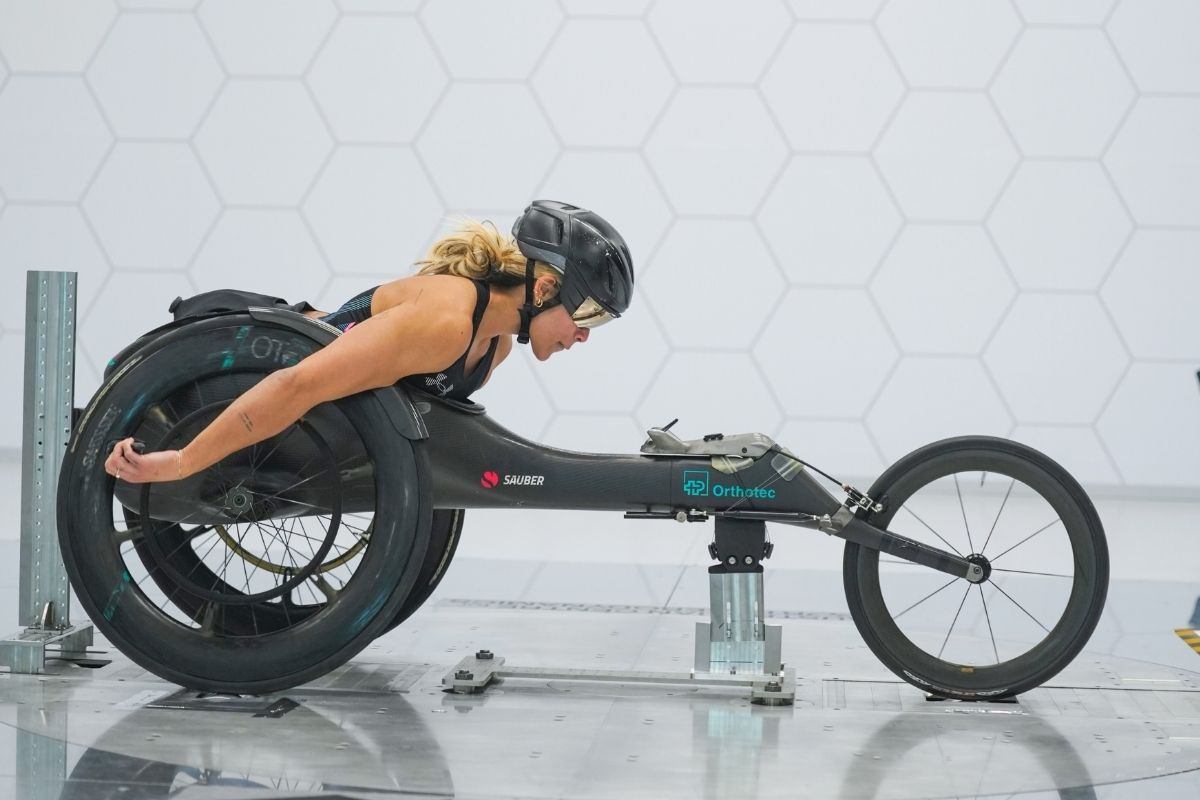
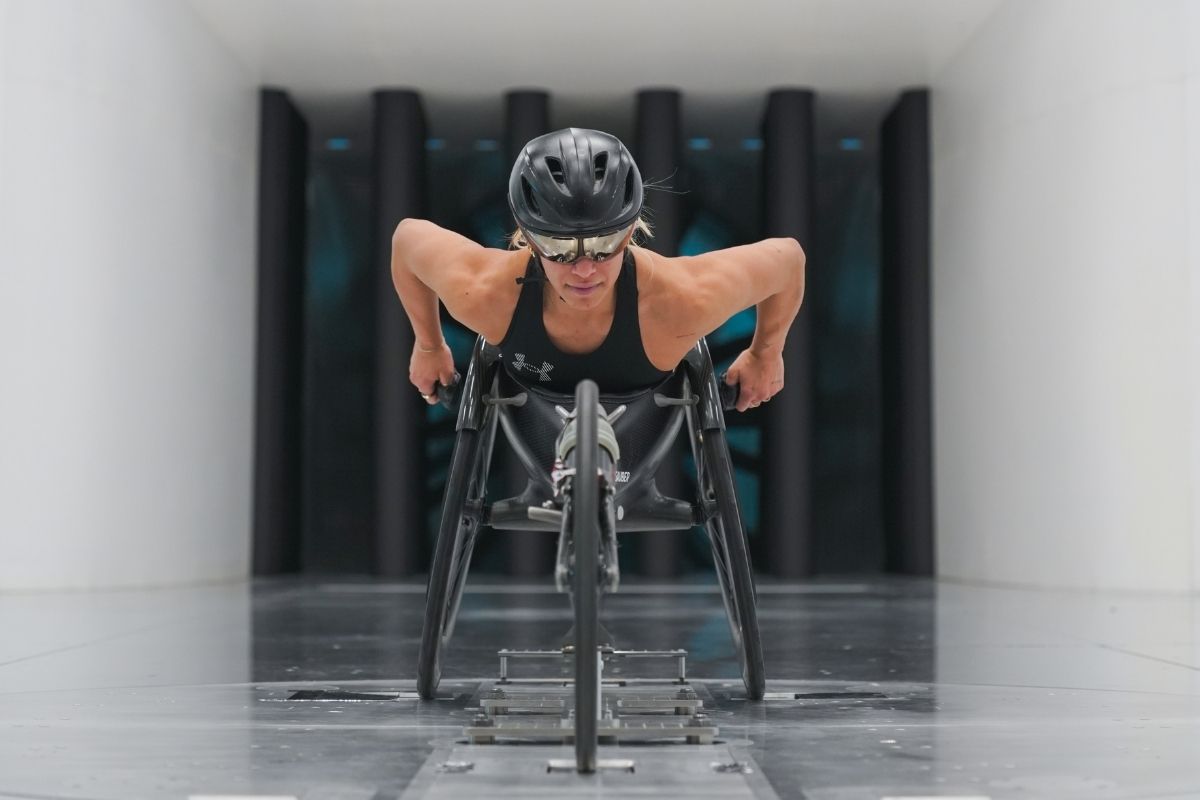
Ahead of the Sydney Marathon, where she finished as the top Australian in the women’s wheelchair race and fourth overall, de Rozario worked closely with the Australian Institute of Sport (AIS) Engineering team to assess her race chair, wheels, clothing, helmet and racing position.
The latest phase of testing took place over three days in the Australian Centre for Sports Aerodynamics (ACSA) wind tunnel at the South Australian Sports Institute in Adelaide, where she saw first-hand how the smallest changes can help her move more efficiently.
“It’s so much information that the guys are going to process and send through to us, but there have been some really cool and interesting takeaways that we’ve gotten to see already,” de Rozario said.
Capable of replicating speeds of up to 110km per hour, the wind tunnel allows athletes, coaches and performance specialists to measure wind resistance and assess changes to equipment, clothing and athlete positioning.
AIS Engineering Lead Andy Richardson said the testing can help identify the best combination for de Rozario while generating insights that could benefit multiple Para athletes.
“The findings will not only help Madison, but we’ll be able to transfer the learnings around the various pieces of equipment and apparel through the rest of the Australian Athletics team and Para Triathlon, which uses similar types of equipment,” Richardson said.
Among the equipment put to the test was a new spoked wheel design, which AIS Engineering has been developing as an alternative to the carbon disc wheels traditionally used.
AIS Engineer Callum McNamara, who has been working with Australian Athletics, said the team drew on its in-house design and manufacturing capabilities to develop a prototype that balanced aerodynamic performance with weight and stiffness.
“We’re able to design, manufacture and test all the axle design in-house here at the AIS, which gives us a unique advantage of being able to engineer a very high-performance solution,” McNamara said.
“The wind tunnel has certainly been instrumental in validating a lot of the work we’ve done.”
With the design showing potential, the team is now exploring how it could benefit the broader Australian wheelchair racing team.
“We certainly had Madison in mind as a candidate for these wheels but later realised this could absolutely be rolled out to the team as a whole,” McNamara said.