- AIS
- Win Well
AIS and QAS leading insights on shaping future champions at Talent ID Conference
The International Talent Identification and Development Conference brought together almost 300 delegates from 16 nations over four energising days across Canberra and Brisbane, to explore current best practice and the future of how to discover and develop the next generation of Australian athletes.
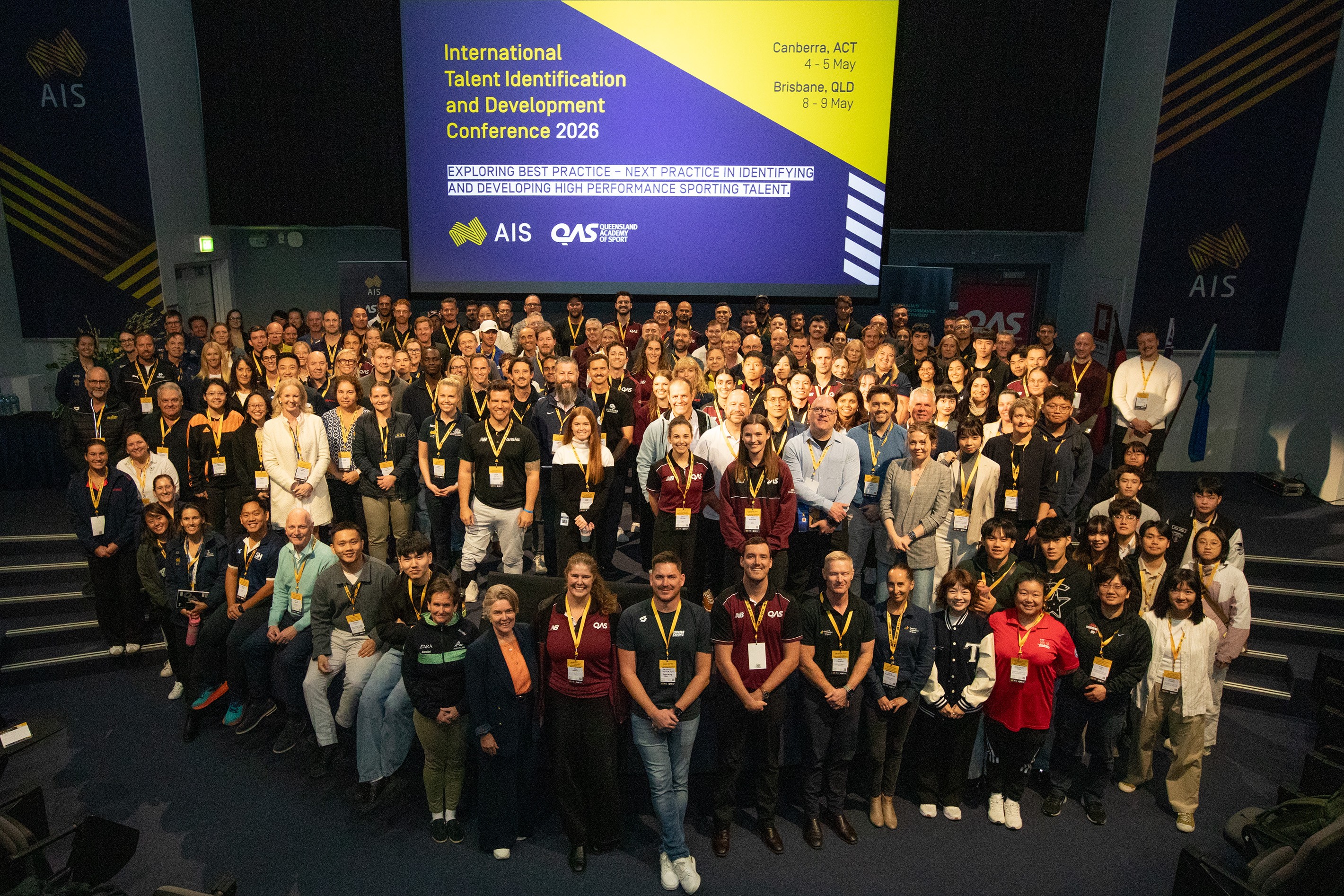
The International Talent Identification and Development Conference brought together almost 300 delegates from 16 nations over four energising days across Canberra and Brisbane, to explore current best practice and the future of how to discover and develop the next generation of Australian athletes.
Co-hosted by the Australian Institute of Sport (AIS) and the Queensland Academy of Sport (QAS), the conference saw academics, coaches, practitioners, athletes and sport administrators engage and showcase a holistic view of talent identification and development.
Across the opening two days at the AIS campus, delegates were immersed in discussions that highlighted just how rapidly the talent landscape is evolving. Presenters from the UK, Japan, Malaysia and Singapore shared how their systems navigate unique cultural and structural contexts, with lessons for how Australia can best build connected, robust environments that allow athletes to thrive.
A recurring theme was the shift from viewing talent purely through early objective indicators of performance potential to understanding and enhancing the environments that shape an athlete’s experience.
Professor Allan Hahn, who pioneered Australian talent systems, emphasised the importance of moving towards quantifying these settings. Conversations explored how belonging, connection and psychological safety influence long term athlete development, with experts emphasising the importance of multisport foundations, the influence of growth and maturation and selection biases, self belief, and the networks that surround emerging athletes.
The growing sophistication in how the sector defines and measures “coachability”, presented by Professor Stephen Cobley, resonated strongly; no longer seen as an intangible, but able to be understood through observable behaviours such as feedback receptivity and persistence.
Dual football and cricket international Ellyse Perry and Winter Olympic medallist Jaclyn Narracott brought these ideas to life, sharing how curiosity, determination and adaptability shaped their own sporting journeys. Their perspectives reinforced the value of blending lived experience with research and data to better understand what drives sustainable talent identification and development in high performance sport.
As the conference moved to Brisbane for its final two days and a focus on next practice, delegates heard from FIFA on its expanding global commitment to talent identification, while the Brisbane Lions offered a compelling look at how professional clubs are using deep insights, combining data, culture building and long term potential modelling, to support athlete growth. A video address from incoming Brisbane Bullets coach Will Weaver added another dimension, highlighting the critical role of talent identification in shaping team identity and future success.
Other highlight sessions included the potential for the use of cognitive assessment in talent systems, and Professor Sophia Nimphius’ examination of differences in athlete development, that highlighted the risks of compressing or accelerating athlete performance pathways too quickly.
Para talent identification was integrated throughout the program, with delegates engaging with emerging research, case studies and practical examples that highlighted the growing global momentum behind Para performance pathways. The conference reinforced that inclusion is not a parallel stream of work but an essential component of a world leading talent system.
Across both cities, the conference enabled practical, future focused conversations that deepen our understanding of how to identify and develop high performance talent, and how to blend human potential and experiences with cutting edge data and technology.
AIS Performance Pathways Manager and Co-Chair of the conference Elissa Morley said the insights shared across the four days will create a lasting impact for the future of talent ID and development.
“Thanks to the delegates representing 92 organisations, this event is the world’s largest International Talent Identification and Development conference,” she said. “World class presentations delivered actionable insights, and the deep discussions and new connections formed will accelerate Australia’s progress in this field.”
As delegates departed Brisbane, the sentiment was clear that the future of talent identification and development is bright, and the work being done now, across research, practice, and athlete experience, will shape the champions of tomorrow.