Sport, climate, and the environment
What are some of the ways in which climate and the environment can impact, and be impacted by, sport?
Participation in many sport and active recreation activities are influenced by weather conditions and environmental factors more generally. Therefore, the way individuals and organisations plan, deliver, and participate is likely to be affected by projected changes in climate, weather events, and other environmental considerations. 1, 2, 3, 4, 5, 6, 7, 8, 25
The sport sector and the broader community are also becoming more aware of the environmental impacts that sport and recreation activities and facilities can have on the environment (e.g., carbon footprint, materials and waste management, sustainable facility design, water and land usage). 4, 7, 9, 10, 11, 25
Individuals, organisations, and the sector can play an active role in helping to mitigate some of the environmental concerns and impacts of and to sport. This can benefit the long-term sustainability of sport participation, sport organisations, and the environment we live, work, and play in. 4, 5, 6, 7, 8, 9, 10, 11
A study of the FIFA 2019 Women’s World Cup in France estimated that 95% of carbon emissions attributed to the event were from spectators (of which 75% was due to international air travel and the remaining made up of emissions from other transport, accommodation, and catering). 12
Key facts

In 2024, 17 out of 36 international summer sport federations had adopted sustainability strategies, 18 had published sustainability guidelines for events, and 23 had signed the United Nations's Sports for Climate Action Framework. 13

Climate change is likely to have an especially strong impact on winter sports. One estimate suggests that by 2050 less than 13 locations (of 21 evaluated) will remain climate reliable to host the Winter Olympic and Paralympic Games. 1

A 2021 survey of over 500 AFL fans found that four out of five believed sport in Australia is feeling the impacts of climate change and a majority would support their club and the league taking action against it. 24
Impact
There are multiple ways in which climate and the environment can impact, and be impacted by, sport, including:
Heat and UV exposure
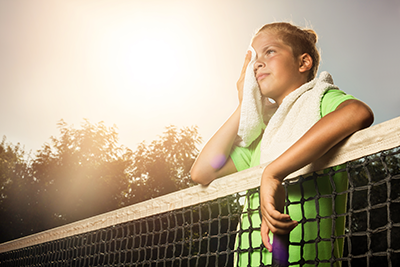
Days of extreme heat (the frequency of days at 35 degrees Celsius or more) and UV exposure affect athletes and pose risks to spectators, officials, and volunteers at all levels. Record-breaking hot temperatures and levels of UV, make it harder to play and perform. 2, 3, 5, 7, 10, 14, 25
- Warmer weather and associated changes to climates are likely to have an even stronger effect on winter sports with significant reductions in snow and ice coverage predicted around the world. 1, 15, 16, 26
Sports Heat Tool
The University of Sydney Sports Heat Tool, opens in a new tab enables users to assess heat stress risk using location-specific, hourly environmental data drawn automatically from the nearest weather station.
Guidelines
- Extreme heat risk and response guidelines and webtool (2025), opens in a new tab, Sports Medicine Australia.
- Position statement to reduce the risks of skin cancer in sport: Sun Safe Sports (2023), The Australian Institute of Sport, Cancer Council, Paddle Australia, the Australian Radiation Protection and Nuclear Safety Agency and Melanoma Institute Australia.
Air quality
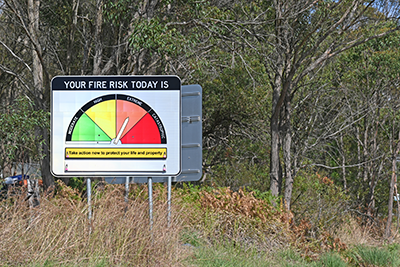
Smoke and air pollution can have a major impact on people's ability to safely participate in sport. Particularly during heat waves, smoke from bush fires can become a significant risk and may exacerbate other heat related conditions. 2, 10, 14, 17, 18
Guidelines
- Exercise in Bushfire Smoke for High Performance Athletes (2023), Australian Institute of Sport.
Floods, drought, and water access
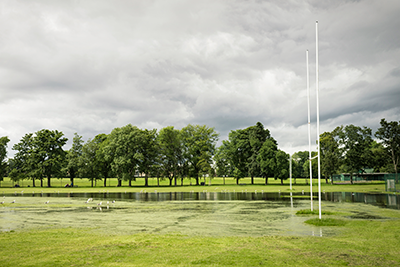
At both extremes, periods of high or low rainfall can impact sport especially through causing the deterioration of playing surfaces. Poor ground conditions also increase the risk of playing injuries, alter playing characteristics, and diminish the appeal and satisfaction of playing. 7, 10, 19, 25
Guidelines
Facilities
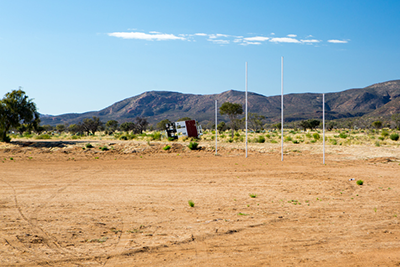
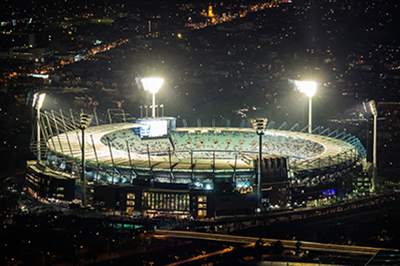
There are many environmental considerations/challenges at every phase of the planning, design, construction, use/operation, and ongoing maintenance of facilities. Built and natural facilities and playing surfaces can be damaged through extreme temperatures, drought or floods, invasive pest species (e.g. fire ants), rising sea levels impacting coastal areas, and more. 4, 5, 7, 11, 19, 20, 25, 28
- Difficulty maintaining competition surfaces/facilities can also lead to higher injury rates for athletes (e.g. suboptimal ice conditions for sliding sports like luge have been linked to potential increases in micro-concussions). 26
Events
Sporting events, especially major events, can involve significant direct and indirect impacts on the landscape and environment through factors such as construction of new facilities and infrastructure and increased waste, pollution, energy, water, and CO2 use/emissions (including international travel for participants and spectators). 4, 7, 11, 21
- The impact of climate risks (particularly heat and air quality) on events, such as reducing the availability of snow and ice for winter competitions or having to move events due to expected high temperatures must also be factored into early planning. 2, 3, 7, 8, 10, 16, 22, 23, 26
- An example of moving events due to expected high temperatures was the 2020 Tokyo Olympic Games. The marathon and race walking events were moved 800km north of Tokyo to Sapporo which had a cooler climate due to heat stress concerns. 27
Policies, procedures, and supporting structures
Organisations and programs that address climate and environmental action and sustainability in sport and active recreation.
Information on funding programs and concessions available from government and non-government sources, including for events, facility development, sustainability initiatives, and when natural disasters such as floods or drought occur is available in the Grants and Funding for Sport and Recreation topic.
The Australian Sports Commission (ASC) is the Australian Government agency responsible for supporting and investing in sport at all levels.
Guidelines
- Position statement to reduce the risks of skin cancer in sport: Sun Safe Sports, The Australian Institute of Sport, Cancer Council, Paddle Australia, the Australian Radiation Protection and Nuclear Safety Agency and Melanoma Institute Australia, (December 2023). This position statement highlights the risk that UV radiation presents in Australia for athletes and support staff; current skin cancer epidemiology in athletic populations; the effectiveness of prevention strategies; and practical recommendations for how Australian sporting codes can act to safeguard their athletes, coaches, officials, volunteers, spectators, and other personnel involved in sport.
- Exercise in Bushfire Smoke for High Performance Athletes (2023), Mathew Mooney, Nirmala Panagodage Perera, Richard Saw, et al., Australian Institute of Sport, endorsed by the Australasian College of Sport and Exercise Physicians (ACSEP) and Sport Medicine Australia (SMA), (January 2023). The current position statement has evolved from the initial AIS 2020 guidelines and summarises empirical evidence relating to health and performance effects of bushfire smoke with a focus of acute to sub-acute health events during periods of poor air quality secondary to bushfire smoke. The current position statement aims to provide practical advice to high performance athletes and coaches needing to train or compete in environments impacted by short term bushfire smoke conditions. Long-term consequences of bushfire smoke exposure, and other sources of air pollution, are beyond the scope of this position statement.
Strategies
- Play Well: Australia’s Sport Participation Strategy (2023), developed by the Australian sport sector, led by the ASC, this strategy highlights that the sport sector "must understand and value the impact the sporting community has and can have on environmental sustainability and broader social impact issues". The plan includes "developing financial and environmental sustainability plans for the sport sector" as part of the horizon 1 activities.
- Places to Play: Australia’s national community sport infrastructure plan, developed by the Australian sport sector, led by the ASC, the plan provides a foundation for more connected and inclusive planning, more targeted and sustainable investment, and more effective use of existing infrastructure to optimise participation outcomes. It highlights “Planet - The environmental context, including climate, sustainability, the increasing impact of extreme weather on infrastructure and participation, along with our changing relationship with natural resources.” as a Common Goal driver.
Programs
- Game Plan helping clubs tackle environmental sustainability, ASC media release, (5 June 2023). To mark World Environment Day, new questions have been added to the ASC’s Game Plan platform to help educate and empower clubs and organisations to reduce their environmental footprint.
Research
- The Future of Australian Sport: The second report: Megatrends shaping the sport sector over the coming decades, Australian Sports Commission (ASC), Commonwealth Scientific and Industrial Research Organisation (CSIRO), (2022). Recognised as a significant trend current and into the future under both ‘sustainability’ and ‘climate change’.
The Australian Conservation Foundation, opens in a new tab was founded in 1965 as a dedicated Australian national environment organisation to help protect Australia's unique wildlife and environment. They have also produced a range of reports that look at how sport is impacted, and impacting, climate and the environment, including:
- Out of bounds: Coal, gas, and oil sponsorship in Australian sports, opens in a new tab, Swinburne University of Technology Sport Innovation Research Group for the Australian Conservation Foundation, (October 2022).
- Powering a sporting nation: Rooftop solar potential of Australian soccer, AFL and cricket stadia, opens in a new tab, Australian PV Institute and University of NSW for the Australian Conservation Foundation, (April 2021).
- Powering a sporting nation: Rooftop solar potential for AFL, opens in a new tab, Australian PV Institute and University of NSW for the Australian Conservation Foundation, (April 2021).
- Powering a sporting nation: Rooftop solar potential for Australian cricket, opens in a new tab, Australian PV Institute and University of NSW for the Australian Conservation Foundation, (April 2021).
- Powering a sporting nation: Rooftop solar potential for Australian soccer, opens in a new tab, Australian PV Institute and University of NSW for the Australian Conservation Foundation, (April 2021).
- Love 40 degrees? Australian Open may have to move to avoid being aced by climate change, opens in a new tab, Monash University and the Australian Conservation Foundation, (January 2020).
- Vicious cycle: Climate change, extreme heat and the tour down under, opens in a new tab, Australian Conservation Foundation, (2020).
- Caught behind: Climate change, extreme heat and the Boxing Day Test, opens in a new tab, Monash University and the Australian Conservation Foundation, (2019).
- Climate Action Plan, opens in a new tab, Australian Olympic Committee, (November 2022). The inaugural Climate Action Plan (CAP) lays out the organisation’s commitment to climate action and sustainability and its leadership role of the Olympic sports in Australia.
The Australian Sporting Goods Association (ASGA), opens in a new tab was formed in 1981 to support, nurture and advocate for Australia’s Sporting and Active Lifestyle Goods Industry.
- TreadLightly, opens in a new tab is a national recycling initiative from ASGA that takes unwanted sport and active lifestyle footwear and sports balls and responsibly recycles them to give them new life.
The Climate Council, opens in a new tab was founded in 2013 as an independent, community-funded organisation to inform, persuade and champion solutions that help secure a safer and more prosperous future.
- Calling Time: How to Remove Fossil Fuel Sponsorships from Sports, Arts and Events, opens in a new tab, (2023). A voluntary code for organisations ready to lead industry efforts to combat climate change. The Code includes:
- Information and evidence about how climate change is upending Australian sports, arts and public events.
- An explanation of fossil fuel greenwashing and how these major multinational corporations use our favourite teams and events to buy social licence.
- A step-by-step guide to assessing current sponsorships and achieving alignment with community, stakeholder and fan expectations of your organisation.
- Game, Set, Match: Calling time on climate inaction, opens in a new tab, Martin Rice, Ella Weisbrot, Simon Bradshaw, et al., Climate Council, (2021). The report describes the influence of climate change on extreme weather events, with a specific focus on how each type of event can affect specific sports. For example, heatwaves on tennis; drought on cricket; bushfire smoke on soccer/football; intense rainfall on community sport; sea-level rise and shifting storms on surfing. The report looks at climate projections and how summer sport might become unplayable without rapid emissions reductions and significant climate adaptations.
Frontrunners, opens in a new tab was co-founded in 2020 by Emma and David Pocock and Lachlan Crombie to provide advice and support across the sporting world—from athletes and associations to clubs and governing bodies—to address the climate crisis. Some of their programs and resources include:
- The Cool Down: protecting the future of the planet, the future of sport, opens in a new tab. Over 450 athletes from 40+ sports have signed the Cool Down climate pledge.
- Keeping score: how does your sport rank?, opens in a new tab FrontRunners teamed up with legal experts from the Environmental Defenders Office to take a closer look at the risks that climate change poses to sports. You can use the tool below to see how your sport stacks up when it comes to their climate policies, with rankings determined by seven key factors.
- Rings of Fire: Heat risks at the 2024 Paris Olympics report, opens in a new tab. The report urges the sporting community to address these concerns and implement changes to ensure athlete safety, well-being, and ability to continue to compete at the highest level.
The Environmental Defenders Office (EDO), opens in a new tab is an environmental law practice in the Australia-Pacific region delivering legal solutions for people, nature and our climate. They have produced several legal resources designed to help the sport sector understand how the law applies to the environment and empower action.
- Making sport safe in a changing climate: A guide for grassroots sport, opens in a new tab, Environmental Defenders Office, (23 January 2025). If you’re a player, a parent, guardian, or coach, our guide can help you understand climate risks to sport and how we can all make sure summer sport is here to stay and safe to play.
- Climate change creates legal risks for sports organisations and directors: report, opens in a new tab, Environmental Defenders Office, (13 March 2024). Sports climate advocacy organisation, FrontRunners, partnered with the lawyers at the Environmental Defenders Office to understand the implications of climate change for sports governance.
Sports Environment Alliance (SEA), opens in a new tab. Founded in 2015, SEA is a not-for-profit organisation, with a purpose to lead, educate and empower the sport ecosystem to take action for and influence a sustainable and regenerative future. They work to share eco-stories, the latest opportunities to engage in the circular economy, and host a number of events to connect with national and international peers, community, commercial and other expert thought leaders. Resources include:
- Case study: Reducing community waste - a team sport, opens in a new tab, Sport Environment Alliance, (2025).
- Case study: Revolutionising Sustainable Strategy, opens in a new tab, Sports Environment Alliance and Bowls Australia, (2022).
- Future Proofing Community Sport and Recreation Facilities: A roadmap for climate change management for the sport and recreation facilities sector, opens in a new tab, Sports Environment Alliance/Victorian Government, (2020).
Sports Medicine Australia (SMA), opens in a new tab is the peak multidisciplinary body for sports medicine, sports science and physical activity in Australia.
- Heat and Sport, opens in a new tab, (accessed 8 January 2026). Provides information and access to resources to help understand how to prepare for, recognise and manage heat stress in sport environments.
- Sports Heat Tool, opens in a new tab, University of Sydney, (accessed 8 January 2026). Website provides a convenient and freely accessible tool for assessing heat stress risk during sport and physical activity in Australia. It is based on the SMA 'Extreme Heat Risk and Response Guidelines'.
- Extreme Heat Risk and Response Guidelines Webtool, opens in a new tab, Sports Medicine Australia, (September 2025). The updated 2025 SMA extreme heat risk and response guidelines, developed with the support of The University of Sydney Heat and Health Research Centre, build upon the policy issued in 2021 providing important improvements, including a freely accessible heat stress risk assessment webtool.
- The Sports Medicine Australia extreme heat risk and response guidelines and web tool, opens in a new tab, Federico Tartarini, James W. Smallcombe, Grant P. Lynch, et al., Journal of Science and Medicine in Sport, Volume 28(9), pp.690-699, (September 2025). Intended users are sporting administrators, coaches, and sport medical teams responsible for the safety and well-being of healthy adults engaging in recreational and community sports and physical activity in hot weather.
State and Territory
State and territory programs that address climate and environmental action and sustainability in sport and active recreation.Sport
Australian and international programs that address climate and environmental action and sustainability in specific sports.International practice
International organisations and programs that address climate and environmental action and sustainability in sport and active recreation.
Further reading and resources






REFERENCES
- The changing geography of the Winter Olympic and Paralympic Games in a warmer world, opens in a new tab, Daniel Scott, Robert Steiger, Michelle Rutty, et al., Current Issues in Tourism, Volume 22(11), pp.1301-1311, (2019).
- Environmental challenges facing athletes, stakeholders and spectators at Paris 2024 Olympic and Paralympic Games: an evidence-based review of mitigation strategies and recommendations, opens in a new tab, Loïs Mougin, Valérie Bougault, Sébastien Racinais, et al., British Journal of Sports Medicine, Volume 58(15), pp.870-881, (2024).
- The impact of extreme heat on mass-gathering sporting events: Implications for Australia and other countries, opens in a new tab, Hannah M. Mason, Jemma C. King, Amy E. Peden, et al., Journal of Science and Medicine in Sport, Volume 27(8), pp.515-524, (2024).
- The game of life: sports’ contribution to improving the health of the planet, opens in a new tab, Corinne Reid, Liz Grant, Jennifer Morris, et al., British Journal of Sports Medicine, Volume 58(7), pp.354-356, (2024).
- Future Proofing Community Sport and Recreation Facilities: A roadmap for climate change management for the sport and recreation facilities sector, opens in a new tab, Sports Environment Alliance/Victorian Government, (2020).
- (Re)scheduling as a climate mitigation and adaptation strategy, opens in a new tab, Madeleine Orr, Jessica Murfree, Laura Stargel, Managing Sport and Leisure, Volume 30(2), pp.150-15, (2025).
- What’s stopping us? Applying psychology to accelerate climate action in sport, opens in a new tab, Latter, B., Whitmarsh, L., Hampton, S. and Sambrook, K., Sport Positive, UN Sports for Climate Action and CAST, (2024).
- The Future of Australian Sport: The second report: Megatrends shaping the sport sector over the coming decades, Australian Sports Commission (ASC), Commonwealth Scientific and Industrial Research Organisation (CSIRO), (2022).
- Cricket and climate change: an integrative review, opens in a new tab, Chris McMillan, Sport in Society, Volume 28(10), pp.1504-1521, (2025).
- Playing against the clock: Global sport, the climate emergency and the case for rapid change, opens in a new tab, David Goldblatt, Rapid Transition Alliance, (2020).
- Nature Action: Sport’s Best Offense and Defense Against the Climate Crisis, opens in a new tab, Sports For Nature, (April 2025).
- Study on the environmental and socio-economic impact of the FIFA Women's World Cup France 2019™, opens in a new tab, Utopies for Local Organising Committee and Fédération Internationale de Football Association (FIFA), (February 2020: Translation: March 2021).
- Three Years of Progress: A Review of Sustainability Across the 2021-2024 Olympic Cycle, opens in a new tab, The Sport Ecology Group & The Sustainability Report, (2024).
- What health threats does climate change pose to sports? A classic Delphi study among multi- and transdisciplinary experts in medicine and sports, opens in a new tab, S. Schneider, M. Niederberger, L. Kurowski, et al., Science & Sport, Volume 39(5-6), pp.489-498, (2024).
- Tennis anyone? Bad news for skiers as snow season could shrink by 78% this century, opens in a new tab, Adrian McCallum, The Conversation, (14 March 2024).
- Global reduction of snow cover in ski areas under climate change, opens in a new tab, Veronika Mitterwallner, Manuel Steinbauer, Gregor Mathes, et al., PLOS One, (2024).
- Smoke Pollution and Exercise, opens in a new tab, Australian Institute of Sport, (December 2019).
- Personal strategies to mitigate the effects of air pollution exposure during sport and exercise: a narrative review and position statement by the Canadian Academy of Sport and Exercise Medicine and the Canadian Society for Exercise Physiology, opens in a new tab, Andy Hung, Sarah Koch, Valerie Bougault, et al., British Journal of Sports Medicine, Volume 57(4), pp.193-202, (2023).
- Major sport stadia, water resources and climate change: impacts and adaptation, opens in a new tab, Greg Dingle, Geoff Dickson, Bob Stewart, European Sport Management Quarterly, Volume 23(1), pp.59-81, (2023).
- How Gold Coast sporting codes are preparing for a fire ant threat this winter, opens in a new tab [paywall], Jake Garland, Gold Coast Bulletin, (26 February 2024).
- Sport is both a climate victim and villain. These champions show there’s another way, opens in a new tab, Marthe de Ferrer, EuroNews, (4 March 2023).
- Predicting climate impacts to the Olympic Games and FIFA Men’s World Cups from 2022 to 2032, opens in a new tab, Walker Ross, Madeleine Orr, Sport in Society, Volume 25(4), pp.867-888, (2022).
- Existential threats to the Summer Olympic and Paralympic Games? a review of emerging environmental health risks, opens in a new tab, Michael Annear, Tetsuhiro Kidokoro, Yasuo Shimizu, Reviews on Environmental Health, Volume 36(2), (January 2021).
- AFL Fans' Perceptions of Climate Change and of AFL Action on Climate Change, opens in a new tab, Monash Climate Change Communication Research Hub, (2021).
- Research and analysis: Exploring the financial implications of climate change on grassroots sport, opens in a new tab, UK Department for Culture, Media & Sport (DCMS), (updated 11 September 2025).
- The snow must go on: Climate change and the uncertain future of winter sport, opens in a new tab, Amina Abdul Jalil, Kyara Simoes, Madeleine Orr, SIRCuit, (19 January 2026).
- IOC plans to move Olympic marathon and race walking to Sapporo for Tokyo 2020, opens in a new tab, Michael Hincks, Olympics.com.au, (16 October 2019).
- Places to Play: Australia’s national community sport infrastructure plan, Australian Sport Sector – led by the Australian Sports Commission, (2026).
Related topics
Last updated: 31 July 2026 Content disclaimer: See Clearinghouse for Sport disclaimer
Is this information complete? The Clearinghouse for Sport is a sector-wide knowledge sharing initiative, and as such your contributions are encouraged and appreciated. If you would like to suggest a resource, submit a publication, or provide feedback on this topic, please contact us.