Sports Performance Recovery
How effective and appropriate physical and mental recovery techniques contribute to improving sport performance.
Recovery after training and competition allows athletes to return to their normal physiological and psychological state as rapidly as possible. 1
Various techniques are employed by athletes so that performance in their next competition or training session will not be unduly compromised by muscle soreness and/or mental or physical fatigue. 1, 2, 3
Optimising both physical and mental recovery supports athlete performance and overall wellbeing. Effective approaches should be tailored to the individual and can include passive, active, and proactive strategies 1
Performance recovery in sport and exercise
There is increasing scientific evidence supporting the benefits of recovery techniques to enhance human performance in various physical exercise and fitness domains—and these are not limited to elite sports athletes. Some examples of ways to enhance recovery include: 1, 2, 3
- Sleep and rest: Both the quality and quantity of sleep and rest are critical for physical and psychological recovery.
- Nutrition: Focussing on 'food first' to hydrate, refuel, repair and protect the immune system through appropriate, and sufficient, nutritional intake.
- Periodisation: Ensuring there is sufficient rest and recovery between hard training or competition sessions allows athletes to better adaptation and performance.
- Warm-up and cool-down: Appropriate warm-ups and active cool-downs can help to enhance recovery and may also reduce the risk of injury.
- Massage: Can promote muscle relaxation and blood flow, but effect on overall recovery may be small.
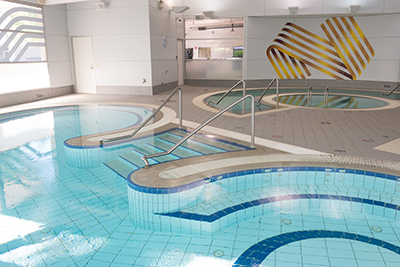
- Hydrotherapy: The use of water immersion as a recovery therapy should be used with consideration for the individual athlete, sport-specific situation, environmental conditions
- Compression garments: Can increase blood flow and reduce swelling both post-exercise and during long-haul travel, may also reduce perceived soreness and fatigue.
- Relaxation techniques: Psychological relaxation techniques, cognitive self-regulation, and proactive recovery strategies like engaging in social activities can help to recover from mental fatigue.
- Travel strategies: High-performance athletes are frequently required to do long-haul travel. Knowing some strategies to better prepare for, and recover from, travel is essential.
Groups, societies and professional bodies
Exercise and Sport Science Australia, opens in a new tab (ESSA) is a professional organisation committed to establishing, promoting, and defending the career paths of tertiary trained exercise and sports science practitioners.
Sports Medicine Australia, opens in a new tab (SMA) is a national multidisciplinary organisation committed to enhancing the health of all Australians through safe participation in sport and physical activity.
Vocational education and training
Performance recovery practitioners come primarily from physiology backgrounds, but recovery also spans a number of other disciplines including medicine, physical therapies, nutrition, strength and conditioning, and psychology. Undergraduate studies may include bachelor's degrees in Sport and Exercise Science; Applied Science; Exercise Science and Human Movement; or similar.
In order to specialise in performance recovery, it is likely that post graduate study will be required which may include the completion of an honours or PhD project in a relevant discipline.
Standards
The Australian Performance Support Practitioner Minimum Standards, developed in line with Australia's High Performance 2032+ Strategy, represent the minimum standards for Performance Support staff and contractors engaged by National Sporting Organisations (NSOs), National Institute Network (NIN) partners, the Australian Olympic Committee, Paralympics Australia, and Commonwealth Games Australia. These standards, along with the AIS Sport Science Sport Medicine Best Practice Principles, are a recommendation within the National Integrity Framework, opens in a new tab.
Performance recovery guidance for sport
Position and consensus statements
Evidence-based position statements on new and complex topics in sports performance recovery.
- Evidence-based position statements and best practice guidelines,, opens in a new tab Australian Institute of Sport, (accessed 11 September 2025). The Australian Institute of Sport (AIS) develops evidence-based position statements on new and complex topics in sports science and sports medicine, in order to provide guidance and leadership for the Australian high performance sport system. Examples include:
- Training load in relation to loading and unloading phases of training, Australian Institute of Sport, (version 2, April 2021).
The REST Hub supports the Australian High Performance Sport System with a range of resources and specialised information to help optimise:
- Recovery – post-exercise recovery, training, and performance outcomes.
- Environment – preparation for, and the management of, thermally challenging environments.
- Sleep – healthy sleep practices to prioritise, protect, and promote sleep.
- Travel – purposeful preparation for, and recovery from, travel.
Additional resources aimed at helping Australian high-performance coaches and staff support optimal athlete preparation and performance, are available on the Clearinghouse for Sport REST Hub network. [access restricted]
- Train consistently by using impactful recovery strategies: Evidence-based sport science and medicine guidance for developing athletes,, opens in a new tab English Institute of Sport, UK Sport, (2021). These resources have been compiled by the English Institute of Sport / UK Sport Performance Pathways Team, based on the expertise and experiences of practitioners working with our GB Olympic and Paralympic programmes, together with current literature findings. The aim is to bring the most appropriate and useful knowledge being applied at the top end of British sports to the athletes, parents and coaches who are currently at an earlier stage of their development journeys.
- Recovery and Performance in Sport: Consensus Statement,, opens in a new tab Michael Kellmann, Maurizio Bertollo, Laurent Bosquet, et al., International Journal of Sports Physiology and Performance, Volume 13(2), pp.240-245, (2018). A symposium on Recovery and Performance was organized at the Technical University Munich Science and Study Center Raitenhaslach (Germany) in September 2016. Various international experts from many disciplines and research areas gathered to discuss and share their knowledge of recovery for performance enhancement in a variety of settings. The results of this meeting are outlined in this consensus statement that provides central definitions, theoretical frameworks, and practical implications as a synopsis of the current knowledge of recovery and performance. Some important issues for future investigations are also elaborated.
Research and resources
- National Institute Network Research. Published sports science/sports medicine research from NIN researchers. This list is updated on a monthly basis.
Journals
- Journal of Applied Physiology, opens in a new tab publishes original research and reviews that examine novel adaptive and integrative physiological mechanisms in humans and animals that advance the field.
- Journal of Physiology, opens in a new tab publishes full-length original Research Articles and Techniques for Physiology, which are short papers aimed at disseminating new techniques for physiological research.
- Physiological Reviews, opens in a new tab provides state of the art coverage of timely issues in the physiological and biomedical sciences.
- International Journal of Sports Physiology and Performance, opens in a new tab publishes authoritative peer-reviewed research in sport physiology and related disciplines, with an emphasis on work having direct practical applications in enhancing sport performance.
- Journal of Science and Medicine in Sport, opens in a new tab is the official journal of Sports Medicine Australia, an international refereed research publication covering all aspects of sport science and medicine.
- Journal of Sports Sciences, opens in a new tab publishes research on various aspects of the sports and exercise sciences, including anatomy, biochemistry, biomechanics, performance analysis, physiology, psychology, sports medicine and health, as well as coaching and talent identification, kinanthropometry and other interdisciplinary perspectives.
- European Journal of Sport Science, opens in a new tab aims to promote the highest standards of scientific study and scholarship in respect of the following fields: Applied Sport Sciences; Biomechanics and Motor Control; Physiology and Nutrition; Psychology, Social Sciences and Humanities; and Sports and Exercise Medicine and Health.
- Exercise and Sport Sciences Reviews, opens in a new tab aims to provide peer-reviewed quarterly reviews of the most contemporary scientific, medical, and research-based topics emerging in the field of sports medicine and exercise science.
Videos
* Licencing restrictions apply to some resources.
- How to increase mental activity and enhance mental recovery in athletic populations, Suzy Russell, Carissa Gardiner, Australian Catholic University, Sports Technology and Applied Research Symposium (STARS), (1 November 2024).
- Jet lag and travel fatigue in elite athletes, Presenter: Andrie Steyn, University of Canberra, Applied Physiology Conference, (29 October 2024).
- Optimising heat acclimation across the National Institute Network, Julian Périard, Deputy Director, Josh Elliott, PhD student, University of Canberra Research Institute for Sport and Exercise (UCRISE), Sports Technology and Applied Research Symposium (STARS), (29 October 2024).
- Are performance & recovery time influenced by the menstrual cycle, Kelly McNulty, Women in Sport Congress (18 August 2022).
- REST Hub update, Peta Maloney, AIS REST Hub Lead, Applied Physiology Conference (12 October 2022).
- Testing the Validity of Wearable Technologies for Assessing Sleep, Heart Rate and Heart Rate Variability, Greg Roach, Professor, The Sleep Lab, Appleton Institute for Behavioural Sciences, CQUniversity, Applied Physiology Conference, (12 October 2021).
- 'Why?', 'How?' and 'Where to?' of Sleep Assessment for Elite Athletes, Professor Greg Roach, Professor of the School of Health, Medial and Applied Science, Central Queensland University, Sports Technology and Research Symposium, (23 November 2020).
Network resources
Networks are a useful way for organisations, committees and both formal and informal working groups to connect, share ideas and exchange knowledge and resources—either openly or through secure channels—to support the development of sport.
Some resources could require login or membership and may be restricted to those working in the Australian sport sector due to licensing, copyright or privacy conditions. If you think you should have access, please contact us.
- Restricted
Physiotherapy and Soft Tissue Therapy Domestic Network Database
Database of Physiotherapists and Soft Tissue Therapists that have High Performance sports experience. - Restricted
REST Hub
Providing the High Performance Sport Network with a range of resources & information across the areas of Recovery, Environment, Sleep, and Travel (REST).
REFERENCES
- Recovery and Performance in Sport: Consensus Statement, opens in a new tab, Michael Kellmann, Maurizio Bertollo, Laurent Bosquet, et al., International Journal of Sports Physiology and Performance, Volume 13(2), pp.240-245, (2018).
- Train consistently by using impactful recovery strategies: Evidence-based sport science and medicine guidance for developing athletes, opens in a new tab, English Institute of Sport, UK Sport, (2021).
- REST Hub, Australian Sports Commission, (accessed 11 September 2025).
Related topics
Last updated: 11 September 2025 Content disclaimer: See Clearinghouse for Sport disclaimer
Is this information complete? The Clearinghouse for Sport is a sector-wide knowledge sharing initiative, and as such your contributions are encouraged and appreciated. If you would like to suggest a resource, submit a publication, or provide feedback on this topic, please contact us.