National Wellbeing Survey
A world-leading initiative helping shape the future of Australian high performance sport.
The National Wellbeing Survey helps us understand how athletes, coaches and staff across Australia's high performance sport system are experiencing wellbeing.
Developed as part of the Win Well Strategy, the survey provides a consistent, system-wide view of what is supporting wellbeing, where pressures are emerging, and where focused action may help strengthen sustainable performance.
About the survey
The survey measures individual wellbeing and people's experiences of their team and organisational environments. It combines quantitative measures with de-identified feedback to identify system-wide patterns, strengths and areas for improvement.
Results are reported in aggregate and are intended to support reflection, learning and action. The survey is not designed to diagnose individual wellbeing or rank sports, institutes or programs.
What the 2025 survey found
In November 2025, the Australian Sports Commission conducted the first National Wellbeing Survey across Australian high performance sport. A total of 1,300 people completed the survey, including athletes, coaches and staff from 43 sports and all state and territory institutes.
- Download report here[PDF • 6.21 mb]
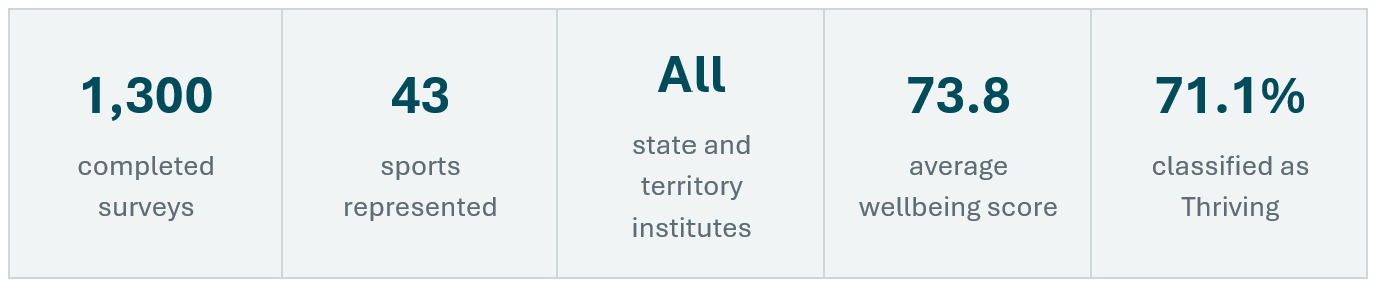

The system is broadly thriving, providing positive early evidence that sustained investment, effort and change over the past decade are strengthening wellbeing across high performance sport. The opportunity now is to build on this strong foundation by making positive experiences more consistent across roles, organisations and groups.
Key findings

System strengths
- Safety was a clear system strength, particularly physical safety and supportive daily environments. These conditions help people feel secure, supported and able to focus on performing and developing.
- People reported a strong sense of purpose and motivation in their sport or work, feeling connected to what they do and that their contribution is meaningful. This supports engagement, resilience and sustained performance.
- Supportive relationships, human connection and inclusive team cultures were important protective factors, helping people feel valued, connected and able to manage the demands of high performance.
- High optimism for the future indicates confidence in the system’s direction, even where present-day pressures are evident.
Areas to strengthen
- Trust, communication and transparency were among the clearest opportunities. Clearer and more consistent communication—particularly around decisions, roles, pathways and support—can strengthen people’s confidence in their environments and sense of fairness and inclusion.
- The differences between groups were generally not large and do not suggest that any group is experiencing low wellbeing overall. Rather, athletes, Para athletes, younger adults, First Nations respondents, people with disability and coaches showed greater variability, meaning their experiences were less consistent across several areas.
- These findings point primarily to structural and environmental opportunities. Strengthening accessible support, inclusive and culturally safe environments, sustainable workloads and consistent everyday practices will help more people experience the system’s strengths and perform sustainably.


Building the evidence over time
The 2025 findings provide the first national baseline. Future survey cycles will help the system understand what is remaining stable, where experiences are changing and where continued attention may be needed.
In participants’ words
Participants shared what had made the greatest positive difference to their wellbeing:
“A sense of community, friendly and amazing support staff.”
“Access to world-class facilities, physios, nutrition and support staff has changed my training performance.”
“Getting a scholarship took away financial stress and helped me pursue my dream.”
Responses from participants in the 2025 National Wellbeing Survey.