Barriers and motivation
Sport, as it is being delivered, is less able to meet the needs of young people, including in secondary school. This is particularly true for disengaged students. It is important for those in sport and education to understand the barriers that impact youth and what can motivate them to participate in sport for active and healthy lives.
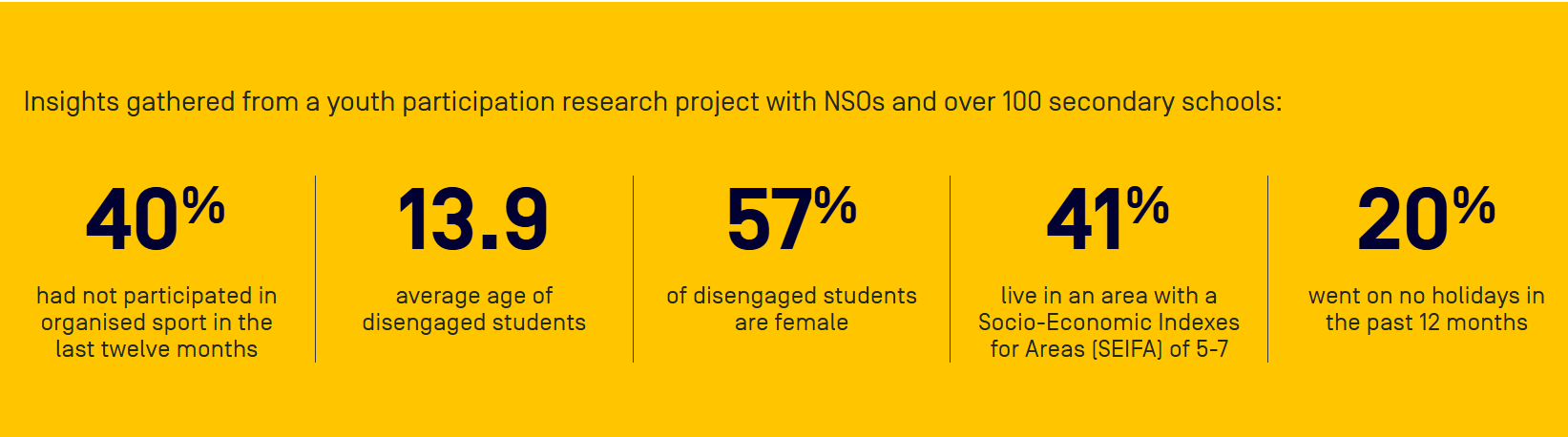
Disengaged and physically inactive youth are likely to be:
- female
- older
- from culturally and linguistically diverse (CALD) backgrounds.
They are:
- less confident to participate in any sport
- less likely to perceive their family and friends as supportive of them playing sport
- less confident to try new sports
- less likely to value sport.
What motivates them to participate in sport?
- To improve their skills and fitness for a healthier, more energetic life
- To spend time with friends whilst having fun.
Barriers to sport delivery
experienced by schools
- Curriculum pressures
- Teacher capability and time
- Cost, equipment and facilities.
Barriers to sport at school
experienced by students
- Loss of interest
- Competing commitments
- Unaware of sport benefits
- No confidence
- Culture
- Gender
- School barriers.
Barriers to sport outside school
experienced by youth
- Family support (financial, time, values)
- Competing time demands
- Limited access to sport or facilities
- Perception of sport clubs wanting competence for competition
- Unlikely to switch sports
Unique groups of disengaged young people
There are 4 unique groups of disengaged youth and they each have different barriers and motivations.
Group 1
Barriers
- Lack of experienced school teachers, sport culture, facilities or equipment in school
- Travel distance for deliverers or students in the community
- Family support for sport fees and transport.
Motivations
- An interest or hobby
- Be active
- Learn new skills
- Social connection.
Group 2
Barriers
- Lack of interest, confidence, fitness, skill or motivation for sport
- Family prioritising academic ability; not supporting girls’ sport participation
- Social norms of gender appropriate sports; peer pressure.
Motivations
- Try alternative sports
- Spend time with friends
- Improve their fitness level and live a healthier lifestyle (after psychological barriers are overcome).
Group 3
Barriers
- Lack of skill, fitness, motivation, confidence, interest; doesn’t value sport; feeling self-conscious
- Cultural practices that prevent mixing genders
- Repetitive or unorganised activities; inexperienced deliverers.
Motivations
- Try a new sport where all students have a low skill level
- Spend time with friends
- Improve their fitness level.
Group 4
Barriers
- Time pressures i.e. employment, academic, socialising
- Sport is too competitive and is a large commitment
- Females affected by gender stereotypes and social norms
- Injured through sport; finding it challenging to return.
Motivations
- Keep up with their fitness and skills
- The challenge of competition without the commitment and intensity
- Stress relief.