Role Models and Sport
How the sport sector can identify and utilise diverse role models to engage and inspire people to improve individual and community outcomes.
A common phrase, used in many spheres, is 'you can't be what you can't see'. One of the primary values of role models, and role model programs, is their ability to demonstrate diversity, inclusion, and to encourage preferred behaviours. 1, 2, 3, 4
Role model programs and research in sport and physical activity are often focused on children and young people, as well as specific demographic groups including women and girls, First Nations, persons with disability, LGBTQ+, and culturally diverse communities. 5, 6, 7, 8, 9
The aim is to increase sport participation and/or address other broader community objectives (such as health and wellbeing, community development, crime and domestic violence reduction). 5, 6, 8, 9, 10, 11, 12, 13
Despite the common focus on elite athletes as role models, research suggests that people in our direct circle of family and relationships – including parents, teachers, and coaches – can have more positive and long-term impacts. 14, 15, 16, 17
"A role model is a person whose behaviour, example, or success is or can be emulated by others, especially by younger people." (Dictionary.com, opens in a new tab)
Key statistics
In 2024, around 9% of Australians (15 years and over) were motivated to participate in sport or physical activity to act as a role model or to encourage others to participate. This motivation was strongest for people aged 35-44 years (14%). 20

A 2015 longitudinal study of Australian female adolescents found that girls whose role models participated in sport, were more physically active than those whose role models did not participate. 14

In a 2024 study, the need for visible and active LGBTIQA+ role models in all aspects of sport, was highlighted as an enabler of sport participation and signal that sport/s are safe, welcoming, and inclusive. 18
A report into First Nations engagement and retention in netball in Western Australia found that the desire to coach, mentor, or be a role model was the fifth most common motivator for participation. 2
In 2024-25, 71% of Australians surveyed felt that Paralympic and disability sport athletes were good role models from them personally. 19
In a 2022 representative survey of European elite athletes, 71% were motivated to be role models, but only 48% saw themselves as currently being one. 52% of athletes felt that society expected them to be role models. 6
Types of role models
Research consistently highlights athletes, coaches, and family as key role models across the life course. However, other people – including friends, teachers, and the broader community – can also be role models in promoting positive engagement in sport, education, and other healthy behaviours. 9, 44, 45, 50, 51, 52, 53, 54, 55
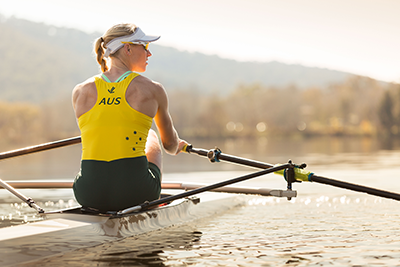
Athletes
Elite and/or high profile athletes are often identified as role models, and both positive and negative behaviours come under intense scrutiny.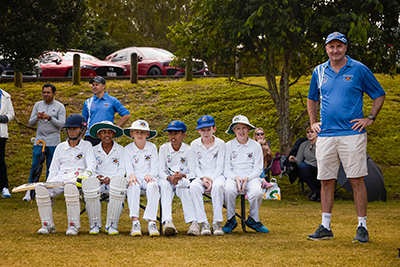
Coaches
Coaches at all levels influence their players/athletes. Their philosophy and method of coaching can shape attitudes, motivation, and impact upon participants wellbeing.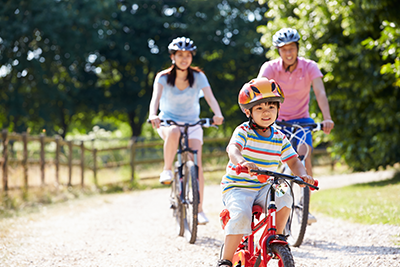
Family
Parents are generally the strongest role models for their children’s participation in sport and physical activity.
Impact
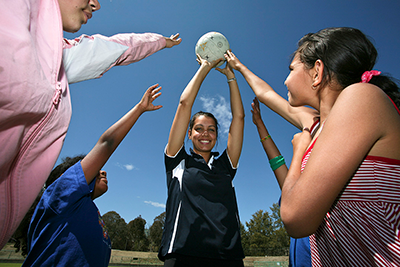
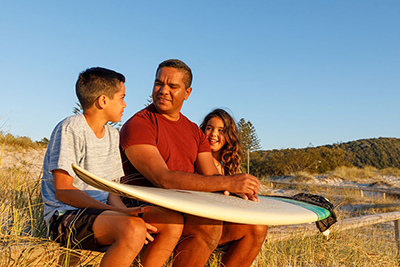
More information on the benefits and impact of role models for different groups is available in these Clearinghouse Evidence Base topics:
Role model programs
Many organisations and programs not only utilise role models and mentors to encourage positive health, social, and wellbeing behaviours and/or address broader community objectives, but also actively work to develop future role models from all levels of the community. 5, 7, 8, 9, 10, 11
Examples of programs with both objectives include:
- Dylan Alcott Foundation, opens in a new tab. Paralympic basketball and tennis champion Dylan Alcott.
- Go Foundation, opens in a new tab. Aboriginal Australian Football League (AFL) players Adam Goodes and Michael O'Loughlin.
- Indigenous Marathon Foundation, opens in a new tab. World marathon champion Rob de Castella.
- McGrath Foundation, opens in a new tab. Cricketer Glenn McGrath.
- Ponting Foundation, opens in a new tab. Cricketer Ricky Ponting.
- Ricky Stuart Foundation, opens in a new tab. Rugby league player Ricky Stuart.
- Sport Access Foundation, opens in a new tab. Para-triathlete Katie Kelly.
- Team Mills Foundation, opens in a new tab. Australian representative and NBA basketball player Patty Mills.
List of charities established by Australian athletes, opens in a new tab (Wikipedia)
- Scholarship & Mentoring Program, opens in a new tab, Sport Australia Hall of Fame. Aims to assist young elite Australians to reach the highest level of their chosen sport by providing financial support and more importantly, unrivalled access to mentoring from a Sport Australia Hall of Fame Member.
- AIS Problem Solvers Program, Australian Sports Commission. An interactive and Australian curriculum aligned program, delivered for free, that encourages primary school students to engage in design thinking, problem solving and learn from high performance athletes.
- Athlete Speakers in Schools, opens in a new tab, Western Australian Institute of Sport. Athletes regularly speak at schools across WA, including going back to their own high school and sharing their experiences. Sharing their journey including the work and challenges overcome including messages on champion behaviours have proven to be a source of inspiration for young people.
- Community Programs, opens in a new tab, Victorian Institute of Sport. Offers programs for government and non-government schools including tours and in-school experiences with athletes to share experiences and positive messages about health, wellbeing, and performance.
- School Visits, opens in a new tab, Paralympic Australia. An interactive, school-based initiative designed to inspire Year 3–6 primary school students in Queensland to champion inclusion, challenge perceptions of disability and build positive social behaviours.
- Olympics Unleashed, opens in a new tab, Australian Olympic Committee. Takes Olympians and aspiring Olympians into Australian schools to inspire and motivate students to be their personal best.
- Indigenous Marathon Foundation, opens in a new tab. Established in 2009 by world marathon champion Rob de Castella. It is a health promotion charity that uses running to celebrate Indigenous resilience and achievement and create inspirational Indigenous leaders.
- Red Dust, opens in a new tab. A health promotion organisation that delivers innovative health promotion programs in partnership with remote communities. The Red Dust Role Models come from a variety of disciplines, including sport, art and music, but are also recognised for their mentoring and teaching capabilities.
- Share a Yarn, opens in a new tab, Australian Sports Commission. Creates space for current or former Australian high-performance First Nations athletes to yarn, reflect, and reconnect with their identity beyond high-performance sport. Through meaningful relationships with mentors, Elders, and peers, athletes are reminded that culture is a source of strength, resilience, and wellbeing.
- Coaching Unlimited, opens in a new tab. A national coaching education program that provides sport-specific coaching accreditation, and research-based health promotion workshops, to support Aboriginal and Torres Strait Islander Peoples become sport coaches and community leaders.
- Mental Fitness Program, Australian Sports Commission. The program sees current and former elite athletes deliver powerful talks to high school aged people about how to keep mentally fit through sharing evidence-based research and stories of resilience.
- Social Impact Ambassadors, opens in a new tab, National Rugby League (NRL). Ambassadors have been trained to deliver and facilitate programs include key themes such as mental health, inclusion & diversity and gender-based violence prevention.
- Paralympic Speakers Program, opens in a new tab, Paralympics Australia. Paralympic athletes have powerful stories about how resilience, teamwork, and commitment can overcome adversity. This program allows Paralympic athletes to share their story and inspire others.
- Thrive with Pride Program, Australian Sports Commission. Aims to support current or former Australian high-performance rainbow athletes and allies with driving LGBTIQ+ inclusion initiatives within Australian sporting communities to help celebrate and empower LGBTIQ+ peoples.
- Daughters & Dads Active & Empowered, opens in a new tab, University of Newcastle. A suite of evidence-based programs that engage fathers/father-figures as role models for their primary school-aged daughters to promote physical activity, enhance sport skills and wellbeing, strengthen family bonds, and advance gender equity.
- Minerva Network, opens in a new tab. Provides mentoring from leading professional women, development programs, networking opportunities and scholarships for Australia's best female athletes to support success during and beyond sport.
REFERENCES
- Keeping Girls in the Game: Factors that Influence Sport Participation, opens in a new tab, Zarrett, N., Veliz, P.T., Sabo, D. Women’s Sports Foundation, (2020).
- Black Diamonds Report, opens in a new tab, Glass Jar, (April 2022).
- She Needs to See it to be it: The Importance of Same-Gender Athletic Role Models, opens in a new tab, Midgley C, DeBues-Stafford G, Lockwood P, et al., Sex Roles, Volume 85, pp.142-160, (2021).
- ‘You can’t be what you can’t see’: Indigenous Australian sportswomen as powerful role models, opens in a new tab, Megan Stronach, Michelle O’Shea, Hazel Maxwell, Sport in Society, Volume 26(6), pp.970-984, (2023).
- The influence of role models on the engagement of people with disabilities in sport: a scoping review, opens in a new tab, B. Bittar, Priscilla, Márcio Pereira Morato, Janine Coates, et al., European Federation of Adapted Physical Activity, (2025).
- Empowering the public value of sports through athletes as role models: Athletes and federations survey report, opens in a new tab, Sofie Smismans, Lynn Praet, Inge Derom, et al., Athletes 4 Society, (2023).
- Empowering the public value of sports through athletes as role models: Results report – inspirational practices, opens in a new tab, Sofie Smismans, Lynn Praet, Jan-Willem Van der Roest, et al., Athletes 4 Society, (2023).
- A sports-based intervention for pupils excluded from mainstream education: A systems approach to intervention acceptability and feasibility, opens in a new tab, A.J. Brinkley, L.B. Sherar, F.E. Kinnafick, Psychology of Sport and Exercise, Volume 61, (2022).
- Youth-led community street sport in practice: balancing programme intentions and peer leadership, opens in a new tab, Julie H. Christensen, Clara Heinze, Mette L. Kurtzhals, et al., Sport, Education and Society, (September 2024).
- How Sydney Roosters star Connor Watson is helping lead the fight against Indigenous youth suicide, opens in a new tab, Nick Campton, ABC, (18 May 2023).
- Mentoring as a tool to engage Aboriginal youth in remote Australian communities: a qualitative investigation of community members, mentees, teachers, and mentors’ perspectives, opens in a new tab, Louisa Peralta, Renata Cinelli, Andrew Bennie, Mentoring and Tutoring: Partnership in Learning, Volume 26(1), pp.30-49, (March 2018).
- Empowering the public value of sports through athletes as role models: Review report, opens in a new tab, Sofie Smismans, Lynn Praet, Inge Derom, et al., Athletes 4 Society, (2023).
- Role models and their influence on children and young people’s reading, opens in a new tab, Aimee Cole, Ariadne Brown, Christina Clark and Irene Picton, National Literacy Trust [UK], (October 2022).
- Role models of Australian female adolescents: A longitudinal study to inform programmes designed to increase physical activity and sport participation,, opens in a new tab Young, J., Symons, C., Pain, M., et al., European Physical Education Review, Volume 21(4), pp.451-466, (2015).
- To whom are active Olympic athletes role models? A cross-country population survey in seven European countries, opens in a new tab, Sebastiaan de Cocq, Veerle de Bosscher, Sofie Smismans, et al., European Journal for Sport and Society, (November 2025).
- The Influence of role models on participation in sport and physical activity among young males and females in Ireland, opens in a new tab, Eimear Kelly, Katie Liston, Kieran Dowd, et al., European Journal of Public Health, Volume 34(Supplement 2), (2024).
- Student responses to physically literate adult role models, opens in a new tab, G. Conlin, Science and Sports, Volume 29, Supplement, p.S17, (October 2014).
- Free to exist: Documenting participation data on LGBTIQA+ young people in sport and physical activity, opens in a new tab, Ryan Storr, Carleigh Yeomans, Kath Albury, et al., Swinburne University for VicHealth, (May 2024).
- Community Perceptions Monitor 2024-25 Annual Report, ORIMA for the Australian Sports Commission, (August 2025).
- AusPlay data porta: Motivations for participation, opens in a new tab, Australian Sports Commission, (accessed 22 January 2026).
- Case Study: Measuring the impact of the FA player appearances programme 2015-2016, opens in a new tab, Women in Sport, (2017).
- Paralympic Legacy: Exploring the Impact of the Games on the Perceptions of Young People With Disabilities, opens in a new tab, Janine Coates and Philip Vickerman, Adapted Physical Activity Quarterly, Volume 33(4), pp.338-357, (2016).
- Athletes of influence - the reality of sports role models, opens in a new tab, Daryl Adair, University of Technology Sydney (UTS), (21 March 2022).
- Understanding the motivators and barriers of elite athletes as role models, opens in a new tab, Lynn Praet, Veerle De Bosscher, Sofie Smismans, et al., Sport in Society, Volume 28(9), pp.1406-1428, (2025).
- Empowering the public value of sports through athletes as role models: Literature review report, opens in a new tab, Sofie Smismans, Lynn Praet, Inge Derom, et al., Athletes 4 Society, (2023).
- Empowering the public value of sports through athletes as role models: Intermediate report - population survey results, opens in a new tab, Veerle De Bosscher, Sofie Smismans, Lynn Praet, et al., Athletes 4 Society, (2023).
- Role Model or Quitter? Social Media’s Response to Simone Biles at Tokyo 2020, opens in a new tab, Steph Doehler, International Journal of Sport Communication, Volume 16(1), pp. 64-79, (2023).
- The position and influence of elite athlete role models in sport and physical activity across the island of Ireland, opens in a new tab [PhD thesis], Eimear Kelly, Technological University of the Shannon (TUS), (2025).
- From Sporting Cripples to Powerful Advocates – How the Paralympic Movement Arrived at its Alcott Moment, opens in a new tab, Greg Blood and Tony Naar, Australian Sport Reflections, (31 January 2022).
- Patty Mills launches 'Team Mills Foundation' to help people in need, opens in a new tab, Chris Dutton, Canberra Times, (27 May 2020).
- You can’t be what you can’t see: the benefits for and the pressures on First Nations sportswomen, opens in a new tab, Michelle O'Shea, Hazel Maxwell, Robyn Newitt. Sonya Joy Pearce, The Conversation, (11 August 2022).
- Rio Paralympics 2016: Athletes find role-model status a tricky balance,, opens in a new tab Marc Lancaster, Sporting News, (9 July 2016).
- ‘They are doing it because they love it’: U.S. and English fan perceptions of women footballers as ‘role models’,, opens in a new tab Rachel Allison, Alex Culvin, Stacey Pope, Sport in Society, Volume 27(10), pp.1529-1548, (2024).
- Here’s to coaches, unsung heroes and role models for social change,, opens in a new tab Andrew Bennie, Director Health and Physical Education, Western Sydney University and Nicholas Apoifis, Lecturer Politics and International Relations, UNSW, The Conversation, (22 August 2016).
- Ideas for action: Exploring strategies to address body image concerns for adolescent girls involved in sport,, opens in a new tab Alyona Koulanova, Catherine M. Sabiston, Eva Pila, et al., Psychology of Sport and Exercise, Volume 56, (2021).
- The impact of coaching on participants, opens in a new tab, Hopkinson M, Sports Coach UK, (2014).
- Engaging Fathers to Increase Physical Activity in Girls: The “Dads And Daughters Exercising and Empowered” (DADEE) Randomized Controlled Trial, opens in a new tab, Philip Morgan, Myles Young, Alyce Barnes, et al., Annals of Behavioral Medicine, Volume 53(1), pp.38-52, (2019).
- Parent-Child association in physical activity and sedentary behaviour, opens in a new tab, Didier Garriguet, Rachel Colley, Tracey Bushni, Statistics Canada, Catalogue no. 82-003-X, Health Reports, Volume 28(6), pp.3-11, (June 2017).
- Parental modelling has a sustainable effect on offspring’s physical activity: the SOPHYA cohort, opens in a new tab, Bettina Bringolf-Isler, Johanna Hänggi, Bengt Kayser, et al., BMC Public Health, Volume 25, article 3435, (2025).
- The inspirational function of role models for sport participation and development,, opens in a new tab De Croock S, De Bosscher V, van Bottenburg M, European Association of Sport Management Congress 2012 Abstract Book, (2012).
- Australian kids need active, sporty parents - 2017, Australian Sports Commission, (2017).
- Immigrant and Swedish adolescents’ involvement in organized sports activities: an expectancy-value approach,, opens in a new tab Darun Jaf, Metin Özdemir, Therése Skoog, BMC Psychology, Volume 9, article number 12, (2021).
- The continued importance of family sport culture for sport participation during the teenage years,, opens in a new tab Åse Strandbu, Anders Bakken, Kari Stefansen, Sport, Education and Society, Volume 25(8), pp.931-945, (2020).
- Barriers and facilitators of sport and physical activity for Aboriginal and Torres Strait Islander children and adolescents: a mixed studies systematic review, opens in a new tab, Tamara May, Amanda Dudley, James Charles, et al., BMC Public Health, Volume 20, Article no.601, (2020).
- Suncorp Australian Youth and Confidence Research 2019, opens in a new tab, Suncorp Australia, (May 2019).
- Births, Australia: 2024, opens in a new tab, Australian Bureau of Statistics (ABS), (15 October 2025).
- Mothers and sportsmen: The gendered and racialised nature of role model selection for Aboriginal and/or Torres Strait Islander youths,, opens in a new tab Michael Andre Guerzoni, Jacob Prehn, Huw Peacock, Australian Journal of Social Issues, Volume 59(2), pp.281-296, (2024).
- Participation in physical activity and sport in adolescent girls from Middle Eastern backgrounds,, opens in a new tab Nariman Dennaoui, Gregory S. Kolt, Justin M. Guagliano, et al., Ethnicity and Health, Volume 29(7), pp.756-773, (2024).
- “Dad! Let's go have a hit…”: Sources and types of support in female cricket players,, opens in a new tab John Warmenhoven, Juanita R. Weissensteiner, Clare MacMahon, Journal of Science and Medicine in Sport, Volume 23(10), pp.991-998, (October 2020).
- Role Models of Aging among Older Men: Strategies for Facilitating Change and Implications for Health Promotion,, opens in a new tab Jordan Deneau, Rylee A. Dionigi, Paula M. van Wyk. et al., Sports, Volume 11(3), (2023).
- Community Group-Based Physical Activity Programs for Immigrant Older Adults: A Systematic Realist Review,, opens in a new tab Jordana Salma, Alesia Au, Sonam Ali, Journal of Aging and Physical Activity, Volume 32(6), pp.784-798, (2024).
- Indigenous Australian women promoting health through sport,, opens in a new tab Megan Stronach, Hazel Maxwell, Sonya Pearce, Sport Management Review, Volume 22(1), pp.5-20, (2019).
- The “ripple effect”: Health and community perceptions of the Indigenous Marathon Program on Thursday Island in the Torres Strait, opens in a new tab, Australia, Rona Macniven, Suzanne Plater, Karla Canuto, et al., Health Promotion Journal of Australia, Volume 29(3), pp.304-313, (2018).
- Sistas’ and Aunties: sport, physical activity, and Indigenous Australian women,, opens in a new tab Stronach, Megan, Maxwell, Hazel, Taylor, Tracy, Annals of Leisure Research, Volume 19(1), pp.7-26, (2016).
- Motivations to be active in club-based sport compared to fitness centres,, opens in a new tab Rochelle Eime, Jack Harvey, Adam Karg, et al., Managing Sport and Leisure, (August 2023).
- Digital Classroom: Sporting Heroes, opens in a new tab, National Library of Australia, (4 September 2023).
- Purpose, Perspective & Paying it Forward: Understanding community contribution in current and retired elite athletes - an exploratory study, opens in a new tab, Adwoah Hammond, Camilla Brockett, Julia Symons, Victoria University and Athletes for Hope Australia, (January 2026).
Related topics
Last updated: 29 January 2026 Content disclaimer: See Clearinghouse for Sport disclaimer
Is this information complete? The Clearinghouse for Sport is a sector-wide knowledge sharing initiative, and as such your contributions are encouraged and appreciated. If you would like to suggest a resource, submit a publication, or provide feedback on this topic, please contact us.