AIS Para Sport - Performance and Wellbeing Support
The AIS Para Sport Performance & Wellbeing (PAWS) Program offers Para athletes, their carers, and support networks a holistic development pathway into, through and beyond Para sport.
PAWS will be delivered by system and leading experts and Paralympian Monique Murphy and explores essential topics including classification, safeguarding, athlete support systems, and wellbeing.
Through engaging webinars and community-focused sessions, participants gain insights, build confidence, and access critical resources to thrive whilst transitioning in, through and beyond sport. Whether you're an athlete, parent, coach, or health professional, this is your opportunity to connect, learn, and grow in the Para sport community.
Register for PAWS webinar series
Monthly webinars starting Monday 30th March 2026.
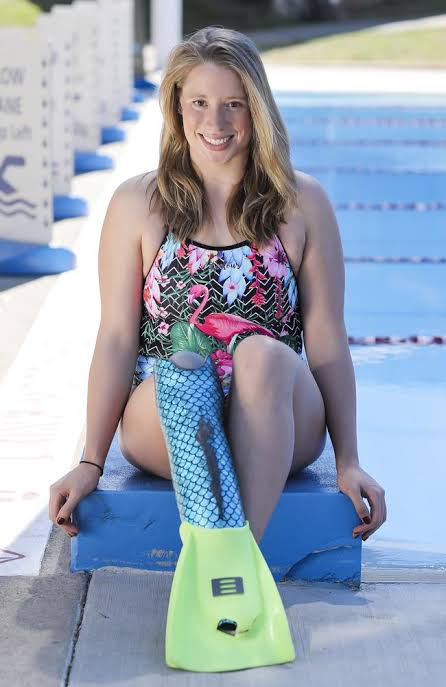
Monique Murphy - PAWS host
Ms Murphy is a Paralympic Swimmer was member of the Australian Dolphins Swim Team. She has been selected for five consecutive Australian Swim Teams and was appointed as the Dolphins Swim Team leader in 2017. She won a silver medal at the Rio Paralympic Games. She has been a team member and Paralympic Education Program presenter with Paralympics Australia since 2019 and is also an Education Presenter for Sport Integrity Australia and a ‘Game Changer’ with Sporting Wheelies, Brisbane (a community / school-based disability training program). She works at the Minerva Network Executive Office managing the QAS partnership and was a Community Custodian with Lifeline / AIS (2019 – 2021). Ms Murphy has a Bachelor of Business degree from Griffith University.Program learning outcomes
- Download PDF[PDF • 187.67 kb]
Guest: Amy Williamson
Learning outcomes:
- Explain what classification is for and how it works.
- Describe how classification helps fairness and meaningful competition.
- Show the steps an athlete needs to take to start the classification process.
Guest: Sally Guest
Learning outcomes:
- Identify the key responsibilities athletes and support personnel have in maintaining a clean sport environment
- Show how modifications (e.g., assistance, communication supports, wheelchair access, sample collection adaptations) are used during testing.
- Explain what athletes can expect during interactions with SIA (e.g., education, testing, reporting mechanisms).
Guest: Sprt Inclusion Australia
Learning outcomes:
- Identify examples of positive behaviour in daily training and competition environments.
- Describe the different types of support available to Para athletes (e.g., classification, coaching, medical support, psychosocial support, accessibility services).
- Develop your own toolkit or plan (e.g., strategies, routines, supports) for staying confident and independent in HP sport environments
Guest: Dr David Hughes
Learning outcomes:
- Identify key health and disability factors that influence training, recovery, and performance in HP sport and life
- Use skills that help build trust and productive relationships with both HP and community based allied health teams.
- Practice self advocacy behaviours such as asking questions, stating needs clearly, and making informed choices about your care
Guest: Kate McIntosh
Learning outcomes:
- Explain how the role of a carer changes between daily life, training environments, and competition settings.
- Compare different care scenarios to determine which approaches best support athlete wellbeing, performance, and autonomy
Guest: Mark Edmonds (NDIS)
Learning outcomes:
- Use NDIS tools (e.g., goal-setting, support categories, planning meetings) to navigate your own NDIS journey.
- Compare what the NDIS can fund versus what high performance programs or NSOs provide, identifying where gaps may occur.
Contact
For any assistance with this page, please contact the AIS at ProfessionalDevelopment@ausport.gov.au.