Safeguarding in Sport
Find information to help keep participants in sport safe from harm and abuse.
Safeguarding in sport is about keeping children, young people and adults safe from harm and abuse. Everyone involved in sport plays a crucial role in creating a safe and supportive environment. 2
Participation in sport should be safe, supportive, and inclusive for everyone. Sport should foster environments where people feel safe to participate, grow their skills, and build positive relationships without fear of discrimination, abuse, or harassment. 1
Sporting organisations have a legal and moral responsibility to protect participants from physical, sexual, or psychological harm or neglect when they participate or attend events and activities. 2
If you see something, say something
Everyone has a role to play in keeping sport safe and fair for everyone. If you see or suspect something is wrong, it’s important to speak up or take action. 33
If you or someone else is in immediate danger call Triple Zero (000)
People can make integrity reports about issues like child safety, discrimination, racism, or cultural concerns in sport.
- Sport Integrity Australia Safe Sport Hotline - for guidance and support relating to child safeguarding, discrimination and racism or cultural concerns | 1800 161 361
- Sexual Misconduct Helpline - 1800 272 435 | 7am-7pm (AEST), 365 days/year
- Sport Integrity Australia - report child safeguarding or discrimination concerns via online reporting forms, opens in a new tab
- Department of Social Services - Find your local child protection agency, opens in a new tab
- More help and support - Find additional, free crisis help and wellbeing support services, opens in a new tab
What is safeguarding?
Safeguarding means taking proactive and continuous action to ensure everyone is safe and treated with respect in sport. It involves creating and embedding safe policies, practices, and cultures that ensure organisations are actively working to prevent harm and have clear procedures for how to act if there are concerns. 2, 3, 4, 34
It can be hard to know how often abuse happens in sport or what form it takes. Abuse is not always recognised or reported and may go on for many years or never be reported at all. 5, 6, 7, 8, 9, 10, 11, 12
Safeguarding is for everyone involved in sport—not just athletes and those under 18 years of age—safeguarding is equally important for coaches, officials, administrators, volunteers, spectators, and fans. 8, 13, 14, 15, 16, 17, 18, 19, 20
Safeguarding should be a priority for all. When done effectively it creates environments where people of all ages and abilities feel encouraged to speak up if they feel uncomfortable or see something that concerns them. This includes being aware of and reporting potential incidents of harm to children and adults, such as: 2, 3, 21
- Sexual harassment, bullying, or abuse. 22, 23, 24, 25, 26
- Threats of or actual violence. 13, 15
- Verbal, emotional, or social abuse. 13, 27, 28
- Cultural or identity abuse, such as racial, sexual, or gender-based discrimination or hate crimes, including harm perpetrated online. 13, 14, 29, 30, 31, 36
- Coercion and exploitation, including sexploitation. 29
- Abuse of power. 21, 26, 28, 32
Safeguarding for children and young people
The safety and wellbeing of children and young people must be embedded in the culture of every Australian sporting organisation and upheld at every level of the sport. 2
All individuals involved in delivering sport in Australia must understand and actively meet their legal, ethical and governance responsibilities for child safety. This includes boards, committees, administrators, volunteers, coaches, parents and participants. 2
Any behaviour that places children and young people at risk is unacceptable. There must be zero tolerance for conduct that compromises their safety or wellbeing. 2
The National Principles for Child Safe Organisations set out a nationally consistent approach to promoting a culture of child safety and wellbeing within organisations including sport. 35
Topic focus
Preventing harm
Protecting athletes, teams, and the sporting community from harm in all its forms.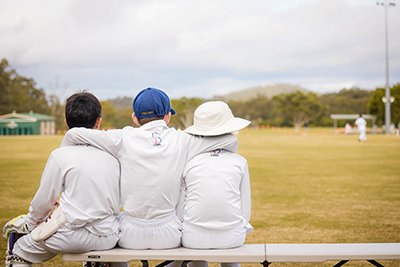
Experiences of participants
Insights into the experiences and perspectives of sport participants on safety and belonging.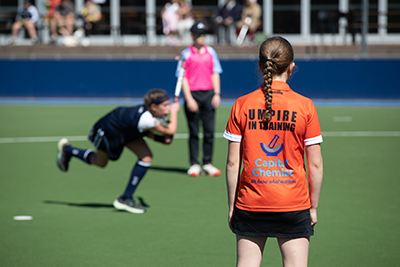
Reporting and assistance
Options for reporting safeguarding and integrity issues in Australian sport.
Reviews
Timeline of reviews relating to integrity in the Australian sport sector.
REFERENCES
- Equity, Diversity and Inclusion, Australian Sports Commission, (accessed 25 February 2026).
- Safeguarding, opens in a new tab, Sport Integrity Australia, (accessed 25 February 2026).
- Governance Toolkit: Safeguarding vulnerable people, opens in a new tab, Australian Charities and Not-for-profits Commission (ACNC), (accessed 25 February 2026).
- International Safeguards for Adults in Sport, opens in a new tab, Safe Sport International, (accessed 26 February 2026).
- Psychological, physical, and sexual violence against children in Australian community sport: frequency, perpetrator, and victim characteristics, opens in a new tab, Pankowiak, A., Woessner, M. N., Parent, S., et al., Journal of Interpersonal Violence, Volume 38(3-4), pp.4338-4365, (2023).
- Interpersonal gendered violence against adult women participating in sport: a scoping review, opens in a new tab, Kirsty Forsdike, Grant O’Sullivan, Managing Sport and Leisure, Volume 29(6), pp.898-920, (2024).
- Elite athletes’ experiences of interpersonal violence in organized sport in Germany, the Netherlands, and Belgium, opens in a new tab, Jeannine Ohlert, Tine Vertommen, Bettina Rulofs, et al. European Journal of Sport Science, Volume 21(4), pp.604-613, (2021).
- Safeguarding strategies in athletes with intellectual disabilities: A narrative review, opens in a new tab, George Raum, Kuntal Chowdhary, Olivia A. Glotfelty-Scheuering, et al., PM&R, Volume 16(4), pp.374-383, (2024).
- Prevalence of interpersonal violence against children in sport in six European countries, opens in a new tab, Mike Hartill, Bettina Rulofs, Marc Allroggen, et al., Child Abuse & Neglect, Volume 146, (2023).
- Someone in their corner: trauma- and violence-informed approaches to disclosures of maltreatment in sport, opens in a new tab, Sheppard-Perkins M, Bradley L, Beaudry S, et al., British Journal of Sports Medicine, Volume58(22), pp.1311-1312, (2024).
- Sustainability of Policies Addressing Harassment and Abuse in Children’s Sports: A Descriptive and Cross-National Account of Five European Countries, opens in a new tab, Shiakou, M., Alexopoulos, A., Avgerinos, A., et al., Journal of Sport and Social Issues, Volume 49(4), pp.309-331, (2025).
- Are some sports riskier than others? An investigation into child athlete experiences of interpersonal violence in relation to sport type and gender, opens in a new tab, Vertommen, T., Sølvberg, N., Lang, M., & Kampen, J. K., International Review for the Sociology of Sport, Volume 60(5), pp.921-945, (2025).
- Online Abuse in Sport Barometer 2025, opens in a new tab, United Against Online Abuse (UAOA), (2025).
- Culture, experiences, gender and sexual harassment for sport and exercise medicine/physiotherapy practitioners working in elite Australian sport, opens in a new tab, S. Cowana, M. Girdwooda, M. Haberfield, et al., Journal of Science and Medicine in Sport, Volume 26(Supp.1), S175-176, (2023).
- Football’s referee crisis: we asked thousands of refs about the abuse and violence that’s driving them out of the game, opens in a new tab, Tom Webb, Harjit Sekhon, The Conversation, (13 June 2024).
- You do not suddenly become safe on your 18th birthday: managing safeguarding cases involving adult athletes in the United Kingdom, opens in a new tab, Olivia Garrod, Daniel Rhind, Sport Management Review, Volume 27(3), pp.344-364, (2024).
- A conceptual analysis of maltreatment in sports: A sport social work perspective, opens in a new tab, Courtney Gattis, Matt Moore, Frontiers in Sports and Active Living, Volume 4, (2022).
- Match officials and abuse: a systematic review, opens in a new tab, Dara Mojtahedi, Tom Webb, Chelsea B. Leadley, et al., European Sport Management Quarterly, Volume 24(1), pp.199-221, (2024).
- SAFER (Support & Awareness for Female fans in European football through Research, prevention, and remedy) - A Handbook on Project Outcomes and Good Practice Recommendations, opens in a new tab, Football Supporters Europe, (2025).
- Implementing an organizational trauma-informed approach: an urgent priority to protect the well-being of all members in sport from the top down, opens in a new tab, Jenny McMahon, Kerry R. McGannon, Chris Zehntner, et al., Sport, Education and Society, (June 2025).
- Infographic. A guide to understanding athlete abuse, opens in a new tab, Tuakli-Wosornu YA, British Journal of Sports Medicine, Volume 55(24), pp.1439-1440, (2021).
- What Enables Child Sexual Abuse in Sport? A Systematic Review, opens in a new tab, Karl Dodd, Colin Solomon, Mitchell Naughton, et al., Trauma, Violence, & Abuse, Volume 25(2), pp.1599-1613, (2024).
- The blurred line in elite sport: exploring UK media reporting of bullying and banter, opens in a new tab, James A. Newman, Subhan Mahmood, James L. Rumbold, Sport, Education and Society, Volume 30(1), pp.57-72, (2025).
- Crossing the line: conceptualising and rationalising bullying and banter in male adolescent community football, opens in a new tab, Robert J. Booth, Ed Cope, Daniel J.A. Rhind, Sport, Education and Society, Volume 29(6), pp.758-773, (2024).
- Beneath the Surface: Mental Health and Harassment and Abuse of Athletes Participating in the FINA (Aquatics) World Championships, 2019, opens in a new tab, Mountjoy, Margo; Junge, Astrid; Magnusson, Christer, et al., Clinical Journal of Sport Medicine, Volume 32(2), pp.95-102, (2022).
- Sexual harassment, abuse and intimate relationships between coaches and athletes: a systematic review, opens in a new tab, Sungwon Kim, Sport, Education and Society, Volume 31(1), pp.43-63, (2026).
- Prevalence of emotional abuse and subsequent feelings in adolescent and young semi-professional male football players, opens in a new tab, Fatemeh RayatSarokolaei, Mohammad Vaezmousavi, Mojgan Memarmoghaddam, Sport, Education and Society, Volume 30(6), pp.754-767, (2025).
- “I always just viewed it as part of sport”: Psychological maltreatment and conformity to the sport ethic, opens in a new tab, Sarah McGee, Gretchen Kerr, Michael Atkinson, et al., Journal of Applied Sport Psychology, Volume 37(4), pp.487-506, (2025).
- Sporting Women and Social Media: Sexualization, Misogyny, and Gender-Based Violence in Online Spaces, opens in a new tab, Emma Kavanagh, Chelsea Litchfield, Jaquelyn Osborne, International Journal of Sport Communication, Volume 12(4), pp.552-572, (2019).
- Snapshot analysis: social media commentary of sportswomen and men, opens in a new tab, PLAN International, (April 2019).
- The Players' Pulse: The RLPA's Annual Player Survey & Findings Report, opens in a new tab, Rugby League Players Association, (2025).
- Coach-Perpetrated Interpersonal Violence: Witnessing, Perceived Harmfulness and the Role of Coaching Motivational Climate, opens in a new tab, Stiliani “Ani” Chroni, Mary Hassandra, Helena Verhelle, et al., European Journal of Sport Science, Volume 26(1), e70113, (2026).
- If you see something, say something, opens in a new tab, Sport Integrity Australia, (accessed 25 March 2026).
- The importance of safeguarding children and vulnerable adults: minimising harm through safer systems and strengthened action, opens in a new tab, Quality Innovation Performance (QIP), (15 May 2025).
- Creating safer sport for children and young people: how to apply the National Principles for Child Safe Organisations, opens in a new tab, Sport Integrity Australia, (updated January 2026).
- The digital sideline: Exploring cyberbullying and online hate by people connected to children’s sports, opens in a new tab, eSafety Commissioner, Australian Government, (2026).
Related topics
Last updated: 27 July 2026 Content disclaimer: See Clearinghouse for Sport disclaimer
Is this information complete? The Clearinghouse for Sport is a sector-wide knowledge sharing initiative, and as such your contributions are encouraged and appreciated. If you would like to suggest a resource, submit a publication, or provide feedback on this topic, please contact us.