Preventing Harm
Protecting athletes, teams, and the sporting community from harm in all its forms.
Preventing harm from occurring is important. When abuse occurs, it can have significant long-term impacts for individuals, organisations, and communities. 4, 5, 9, 10, 11
Some of the key areas of focus for ensuring that participants are safe include:
- Mental, physical, and social wellbeing. 12, 13, 14
- Physical and online safety. 2, 3, 7, 8, 15, 36
- Including the use of technology, as both enabler and barrier to abuse, e.g. data ownership and protection, and reducing online abuse. 2, 16, 17, 18, 19, 36, 37
- Protecting children and young people. 6, 20
- Including setting reasonable age guidelines for competitive sport and athlete development pathway stages and ensuring those working with children and young people are suitable through child safe screening and selection processes. 21, 35
- Improving governance and culture relating to disclosure, reporting, and responding to incidents of harm. 1, 5, 10, 22, 23, 24, 25, 26, 27, 28, 29, 30, 31, 32
- Restorative programs and support for those who have experienced harm. 11, 33, 34
National Integrity Framework (NIF)
The Sport Integrity Australia National Integrity Framework, opens in a new tab (NIF) creates a consistent approach for sports to protect their members, keep their sport safe and fair, deal with integrity threats and manage complaints, and hold people who do the wrong thing accountable.
Organisations signing up to the Framework must adopt the full suite of policy templates as a package. These include the:
- Safeguarding Children and Young People Policy
- Competition Manipulation and Sports Betting Policy
- Participant Protection Policy
- Improper Use of Drugs and Medicine Policy
- Complaints, Disputes and Discipline Policy
A full list of sporting organisations signed up, opens in a new tab to the National Integrity Framework is available.
The Australian Sporting Alliance for People with a Disability (ASAPD) has developed Easy English versions, opens in a new tab of key NIF policies to help people with intellectual or cognitive impairments, low literacy, and those who speak English as an additional language understand the policies more easily.
Strategies, Guidelines and Resources
Focus areas
Supporting people in sport to better understand and improve safety in specific areas of focus.
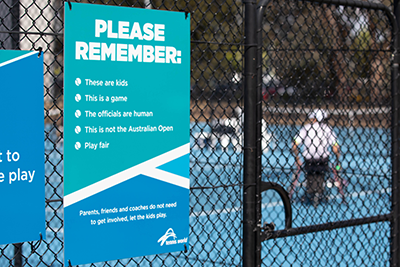
Children and young people
Improving the safety of children and young people (under 18) in sport.Elite sport
Supporting safe practices in high performance sport environments.Harassment and abuse
Reducing the incidence of harassment and abuse in sport environments.Health and wellbeing
Supporting participants’ mental and physical wellbeing.Online environments
Promoting safe and welcoming online and digital sport environments.Safe and welcoming environments
Fostering inclusive and respectful sport environments for all participants.
State and Territory
Australian state and territory based, government and non-government organisations programs and resources to help support and encourage safeguarding in sport.








Sport
Sport specific programs and resources to help support and encourage safeguarding in sport.

International
International programs and resources to help support and encourage safeguarding in sport.

REFERENCES
- Someone in their corner: trauma- and violence-informed approaches to disclosures of maltreatment in sport, opens in a new tab, Sheppard-Perkins M, Bradley L, Beaudry S, et al., British Journal of Sports Medicine, Volume58(22), pp.1311-1312, (2024).
- Online Abuse in Sport Barometer 2025, opens in a new tab, United Against Online Abuse (UAOA), (2025).
- Football’s referee crisis: we asked thousands of refs about the abuse and violence that’s driving them out of the game, opens in a new tab, Tom Webb, Harjit Sekhon, The Conversation, (13 June 2024).
- Implementing an organizational trauma-informed approach: an urgent priority to protect the well-being of all members in sport from the top down, opens in a new tab, Jenny McMahon, Kerry R. McGannon, Chris Zehntner, et al., Sport, Education and Society, (June 2025).
- Infographic. A guide to understanding athlete abuse, opens in a new tab, Tuakli-Wosornu YA, British Journal of Sports Medicine, Volume 55(24), pp.1439-1440, (2021).
- What Enables Child Sexual Abuse in Sport? A Systematic Review, opens in a new tab, Karl Dodd, Colin Solomon, Mitchell Naughton, et al., Trauma, Violence, & Abuse, Volume 25(2), pp.1599-1613, (2024).
- Sporting Women and Social Media: Sexualization, Misogyny, and Gender-Based Violence in Online Spaces, opens in a new tab, Emma Kavanagh, Chelsea Litchfield, Jaquelyn Osborne, International Journal of Sport Communication, Volume 12(4), pp.552-572, (2019).
- Snapshot analysis: social media commentary of sportswomen and men, opens in a new tab, PLAN International, (April 2019).
- Parents’ Own Experience of Verbal Abuse Is Associated with their Acceptance of Abuse towards Children from Youth Sports Coaches, opens in a new tab, Yutaka Yabe, Yoshihiro Hagiwara, Takuya Sekiguchi, et al., The Tohoku Journal of Experimental Medicine, Volume 249(4), pp.249-254, (2019).
- The Safe Sport Allies bystander training: developing a multi-layered program for youth sport participants and their coaches to prevent harassment and abuse in local sport clubs, opens in a new tab, Karolien Adriaens, Helena Verhelle, Gjalt-Jorn Ygram Peters, et al., Frontiers in Psychology, Volume 15, (2024).
- “No one wants to talk about it:” Voices of impacted people on the participation of athletes convicted of sexual offenses at mega sporting events, opens in a new tab, Renata Falcão, Thomas More University of Applied Sciences for Stichting Sport & Rights Alliance, (October 2025).
- “There just isn't any other option—so we just have to put up with it”: mental health in women's cycling and the necessity of structural change, opens in a new tab, Jill Colangelo, Alexander Smith, Anna Buadze, et al., Frontiers in Sports and Active Living, Volume 5, (2023).
- Psychological safety in sport: a systematic review and concept analysis, opens in a new tab, Stewart A. Vella, Elizabeth Mayland, Matthew J. Schweickle, et al., International Review of Sport and Exercise Psychology, Volume 17(1), pp.516-539, (2024).
- Mental health service provision in elite sport: An evaluation of the Australian Institute of Sport Mental Health Referral Network, opens in a new tab, Vita Pilkington, Courtney C. Walton, Kate Gwyther, et al., Journal of Applied Sport Psychology, Volume 37(4), pp.397-421, (2025).
- Social media impact on athlete mental health: #RealityCheck, opens in a new tab, Putukian M, Blauwet C, Currie A, et al., British Journal of Sports Medicine, Volume 58(9), pp.463-465, (2024).
- Social Protect rolled out to NBL / WNBL with collaborative partnership, opens in a new tab, Basketball Australia, (26 November 2025).
- Social Protect, opens in a new tab, Rugby Australia, (accessed 4 March 2026).
- Using AI responsibly in youth sport, opens in a new tab, Child Protection in Sport Unit [UK], (2026).
- Best Practice Principles on Athlete-Centric Governance of Technology and Athlete Information, Australian Sports Commission, (April 2023).
- Operation Refuge: An Examination of Doping Among Minors, opens in a new tab, World Anti-Doping Agency (WADA), (January 2024).
- Elite Youth Athlete Guidelines, Australian Sports Commission, (2026).
- Discussing safe sport in the digital space: the #gymnastalliance movement, opens in a new tab, Erin Willson, Anika Taylor, Gretchen Kerr, et al., International Journal of Sport and Exercise Psychology, Volume 22(6), pp.1529-1548, (2024).
- Telling adults about it: children’s experience of disclosing interpersonal violence in community sport, opens in a new tab, Mary N. Woessner, Aurélie Pankowiak, Emma Kavanagh, et al., Sport in Society, Volume 27(5), pp.661-680, (2024).
- Listening to Athletes' Voices: National Team Athletes' Perspectives on Advancing Safe Sport in Canada, opens in a new tab, Erin Willson, Gretchen Kerr, Anthony Battaglia, et al., Frontiers in Sports and Active Living, Volume 4, (2022).
- Responding to Violence Against Women in Sport: Challenges Facing Sport Organizations in Victoria, Australia, opens in a new tab, Kirsty Forsdike, Alex Donaldson, Emma Seal, Research Quarterly for Exercise and Sport, Volume 93(2), pp.352-367, (2022).
- Safe to Speak, Bound to Act: A toolkit for safer sport, opens in a new tab, SaferSport, (2026).
- Complaints procedure for aggrieved athletes thwarts necessary cultural change in gymnastics in Australia, opens in a new tab, Roberts VL, Quigley AS, British Journal of Sports Medicine, Volume 58(1), pp.50-52, (2024).
- What would you do? Developing, implementing and evaluating a coach bystander intervention to prevent sexual violence in youth sports clubs, opens in a new tab, Helena Verhelle, Tine Vertommen, Karolien Adriaens, et al., Journal of Applied Sport Psychology, Volume 36(5), pp.809-830, (2024).
- Fighting the system: Psychology consultants’ experiences of working with cases of maltreatment in sport, opens in a new tab, James A. Newman, Adam Lickess, Andrew J. Higham, Journal of Applied Sport Psychology, Volume 36(2), pp.210-230, (2024).
- #WhatWouldYouDo? A cross-sectional study of sports medicine physicians assessing their competency in managing harassment and abuse in sports, opens in a new tab, Mountjoy M, Verhelle H, Finnoff JT, et al., British Journal of Sports Medicine, Volume 58(22), pp.1353-1359, (2024).
- Nonaccidental Violence Among Elite Athletes in Finland: Associations With Sport Conditions and Mental Well-Being and Ill-Being, opens in a new tab, Satu Kaskiand Ulla Kinnunen, Journal of Clinical Sport Psychology, Volume 17(4), pp.482-501, (2023).
- Athlete Perceptions of Governance-Related Issues to Sexual Abuse in Sport, opens in a new tab, Jörg Krieger, Lindsay Parks Pieper, Social Sciences, Volume 12(3), (2023).
- ASC Restorative Program, Australian Sports Commission, (accessed 25 February 2026).
- National Redress Scheme: For people who have experienced institutional child sexual abuse, opens in a new tab, Australian Government, (accessed 6 March 2026).
- Recruitment and screening of staff and volunteers in child-related positions, opens in a new tab, Sport Integrity Australia, (2025).
- The digital sideline: Exploring cyberbullying and online hate by people connected to children’s sports, opens in a new tab, eSafety Commissioner, Australian Government, (2026).
- Livestreaming in community sport, opens in a new tab, Play by the Rules, (June 2026).
See more on this topic:
Last updated: 21 May 2026 Content disclaimer: See Clearinghouse for Sport disclaimer
Is this information complete? The Clearinghouse for Sport is a sector-wide knowledge sharing initiative, and as such your contributions are encouraged and appreciated. If you would like to suggest a resource, submit a publication, or provide feedback on this topic, please contact us.