Social cohesion
How do sport and physical activity support social cohesion in Australian society?
Social cohesion, social connection, and social capital are interrelated concepts that can support and enable a more resilient and healthier Australian society. 1, 2, 3
Cohesion, defined as 'a society that supports connections with family, friends and the community, values diversity, and promotes belonging and culture', is identified as one of the five overarching themes in the national Measuring What Matters wellbeing framework. 18
The Australian Government is also actively working to strengthen cohesion through the dedicated Office for Social Cohesion, opens in a new tab.
People who perceive strong cohesion within their neighbourhoods and actively participate in their communities are more likely to feel a greater sense of belonging, trust others, be happy, and be more accepting of immigrants. 4
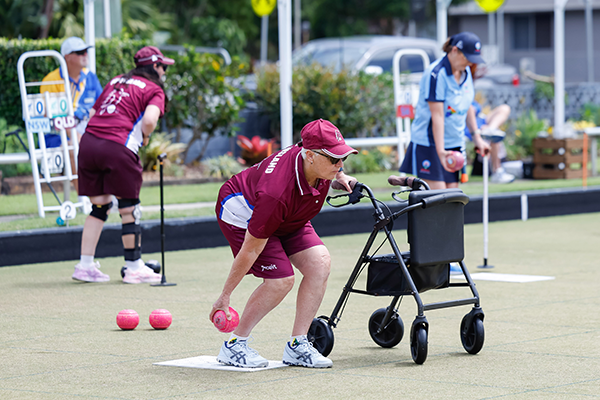
Sport can be a valuable setting for people to connect with others socially, to belong, and for promoting inclusion, diversity, positive culture, and values. This includes encouraging participants to actively engage in their community through volunteering and leadership roles. 5, 6, 7, 8, 9
Definitions
Many definitions of social cohesion and related concepts exist from a range of perspectives and disciplines. The variety of contexts and purposes for which social cohesion is defined can make it difficult to compare measures and assess impacts across sources. 10, 11, 40
Some examples of Australian definitions include:
Social cohesion
- Social cohesion refers to the extent to which people, groups and institutions with different identities, views, and preferences are connected through durable, inclusive, high-quality relationships that enable collaboration towards collective goals across the whole of society. 1, 2
Social connection
- Social connection (or connectedness) refers to the ways that people interact with and relate to one another, the quantity and quality of time individuals spend with one another, and the support they feel they have. 1
Social capital
- Social capital refers to the resources individuals can access through their relationships, including the trust, support, and opportunities that flow through bonding, bridging, or institutional ties. 2
Strong social connection and capital are generally associated with better social cohesion, however this is not guaranteed. Social cohesion is broader than relationships and connections. It also reflects the extent to which individuals can cooperate with people who have different ideas, identities, experiences, and interests to create a healthier, more resilient, and sustainable Australia for all. 1, 2, 11
The role of sport

Sport can help support and develop elements of social cohesion and social capital, including: 9, 12, 13
- connecting people to their communities
- increasing feelings of trust and belonging
- encouraging people to work together for mutual goals
- providing a network of relationships that can support people throughout their lives

In a survey of Australians aged over 18 years, many agreed that sport can play an important role in developing community cohesion, including: 14
- sport has a positive influence in their community (73%)
- sport can be a good way to meet people and make friends (73%)
- sport is a place people can feel a sense of belonging (68%)
- sport is important for bringing people together in their local communities (61%)
- sport is important to having a positive Australian national identity and culture (60%)
- sport is important to having an inclusive Australian society (58%)
- even people not directly involved themselves can benefit from sport in the wider community (54%)

A 2018 study by Griffith University found that participants who were members of sports clubs scored higher on measures of social capital, followed by non-club sport participants, and lastly those who did not participate in sport at all. It also valued the social benefits of playing community club-based sport once per week to be worth $5,932 per participant, per year. 12

In 2018, the social benefits of sport infrastructure, including facilitating social interactions and providing ‘green space’ (e.g. sports fields) were valued at $5.1 billion annually. 15
The Australian sport sector recognises the role sport can play in fostering connection, belonging, inclusion and community engagement, with many of these priorities reflected in its national strategies.
- Play Well: Australia's Sport Participation Strategy has a clear focus on ensuring sporting environments are enjoyable, inclusive, welcoming, and safe for all. It acknowledges the value of sport in enhancing social connection and cohesion, through a sense of belonging, forming close friendships, and a desire to give back to the community through volunteering.
- Win Well: Australia's High Performance 2032+ Sport Strategy recognises that high performance sport can contribute to outcomes beyond medals, including social connection and community cohesion. The strategy emphasises wellbeing, diversity, inclusion and belonging, while also recognising the role athletes can play in fostering national pride and bringing communities together.
Social cohesion and community engagement
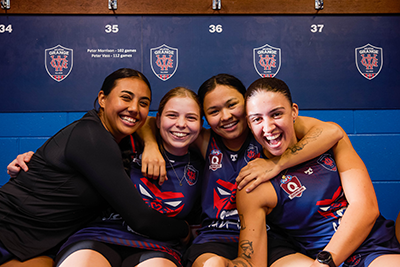
Community cohesion
Sport has the capacity to reach and engage with people across the whole of Australian society. Various reports and measures consistently show that the sport sector is one of, if not the, most common settings for social and civic participation in Australia, including:
- In 2025, 42% of Australians participated in sport or physical activity through an organisation. 16
- In 2024, 30% of Australians who participated in social groups did so through sport or recreation activities. 7
- In 2025, 33% of Australians who volunteered through an organisation chose activities related to sport and physical recreation. 17
Australia’s national wellbeing framework, Measuring What Matters, includes several measures where the sport sector can have a significant impact: 18
- Spending time participating in recreation and social activities, including sport, enriches people’s lives and contributes to social cohesion.
- Volunteering is a measure of social connection, which is essential for feeling satisfaction with life.
- While not explicitly noted in measurements, sport can also play a role in increasing the health of participants and their feelings of trust, inclusion, and safety in the community, which contribute to other wellbeing outcomes. 9
The shared camaraderie of watching or cheering for high-performance athletes and teams has a strong impact on developing community cohesion. Research suggests that certain groups within the community are more likely to feel pride and happiness from the achievements of elite athletes in international competitions, including: 14, 19, 20, 21, 22
- individuals with lower educational levels and/or lower incomes
- those from culturally and racially diverse backgrounds
- older individuals.
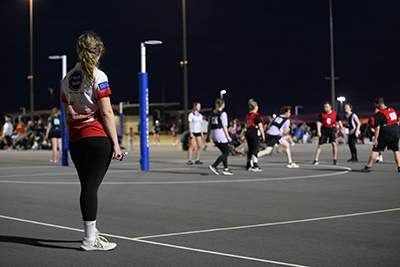
Trust and community engagement
In 2019, over 30% of Australians surveyed agreed that local, state, and national sports organisations demonstrated leadership for the greater good to a ‘fairly large’ or ‘extremely large’ extent. 23
Government investment in a wide variety of sports provides the opportunity to better engage with diverse communities and people from different cultural backgrounds, and encourages greater community inclusion and sense of belonging. 14, 19, 20, 24, 25
People who are members of local sporting clubs are more likely to: 24, 26, 27, 28, 29, 30, 31, 32, 33, 34
- demonstrate greater trust in other people
- possess a stronger sense of belonging to their community
- form more close friendships
- have mixed-ethnic friendship groups
- achieve greater levels of life satisfaction, happiness and health
- possess a greater desire to give back to their community through volunteering.
In line with the ongoing UK Government’s Active Lives survey, a 2019 survey of South Australians aged 18 years and over found that those who were more physically active (through sport or other physical activities) and those who volunteered regularly in sport were more likely to agree that they: 35, 36
- felt most people in their local area could be trusted
- felt safe walking in their local community after dark
- identified with their local community.
Challenges
While sport can support building community connection, cohesion, and social value, this may not always be the case. Poor behaviour or cultures, a lack of inclusion, or experiences of discrimination, harassment, or abuse can have negative impacts on individuals and the broader community. 9, 37, 38, 39
In a survey of Australians aged 18 years and over, 75% of respondents felt they would be welcomed and valued at local sports clubs. Those more likely to feel excluded were: 14
- Women (28%)
- Those aged over 55 years (29%)
- Those with disability (34%)
- People with disability were also more likely to say they would not feel safe and accepted at sporting events (27%, compared with 20% overall).
There is currently a limited evidence base and relatively few data sources available to measure the ongoing impact of sport on social cohesion. Existing social cohesion research in sport and physical activity contexts has often defined and measured social cohesion through a relatively narrow lens, focusing primarily on social relations, such as social networks and trust between people. 8
Strengthening the evidence base could help to understand how sport can even more effectively contribute to a healthier, more resilient, and sustainable society for all. 5, 6, 8, 10, 11, 24, 41
REFERENCES
- Social cohesion and social connection, opens in a new tab, Australian Institute of Health and Welfare, (16 October 2025).
- Measuring social cohesion in Australia: towards a shared framework and wider measurement approach, opens in a new tab, Alex Fischer, Nicholas Biddle, Hugh Piper, et al., Australian Resilient Democracy Network, (20 April 2026).
- Office for Social Cohesion, opens in a new tab, Australian Government, Department of Home Affairs, (accessed 17 July 2026).
- Mapping Social Cohesion 2025: Social connections through troubled times, opens in a new tab, Scanlon Foundation Research Institute, (accessed 31 July 2026)
- Mapping the hot spots and cold spots across our civic life journey: data shows ways to improve access to civic engagement and participation, opens in a new tab, Liam Graeme, Alex Fischer, Llewy Ross, et al., Australian Resilient Democracy Network, Democracy Data Update 3, (26 May 2026).
- Mapping Access to Civic Participation Opportunities across Australia, opens in a new tab, Alex Fischer, Nicholas Biddle, Australian Resilient Democracy Network, Discussion Paper 9, (16 September 2025).
- The civic health of Australia: A national portrait in 30 charts, opens in a new tab, Wilson, S. G., Kowalski, E. V., & Demsar. V, Swinburne University of Technology, Australian Leadership Index, (2024).
- Conceptualisation and Measurement of Social Cohesion within the Sport and Physical Activity Context: A Scoping Review, opens in a new tab, Louis Moustakas, Jule Wagner, sports, Volume 11(12), (2023).
- Policy Considerations for Elevating the Capacity of Australian Community Sport Clubs in Building Social Capital and Promoting Social Cohesion in Rural Settings, opens in a new tab, Charles Mountifield, International Journal of the Sociology of Leisure, Volume 9, pp.425-452, (2025).
- Sport for social cohesion: from scoping review to new research directions, opens in a new tab, Louis Moustakas, Denise Robrade, Sport in Society, Volume 26(8), pp.1301-1318, (2023).
- Sport for social cohesion: a conceptual framework linking common practices and theory, opens in a new tab, Louis Moustakas, Sport In Society, Volume 27(10), pp.1549-1567, (2024).
- Economic value of community club-based sport in Australia (2018), Australian Sports Commission and the Griffith Business School at Griffith University, Queensland, (2018).
- Sport and social capital, Australia, 2010, opens in a new tab, Australian Bureau of Statistics, (27 March 2012) [final edition].
- Community Perceptions Monitor: Annual report 2024-25, Australian Sports Commission, (August 2025).
- The value of community sport infrastructure: Investigating the value of community sport facilities to Australia (2018), KPMG for the Australian Sports Commission, (2018).
- AusPlay Data Portal: Overall participation – participation through an organisation, opens in a new tab, Australian Sports Commission, (accessed 31 July 2026).
- General Social Survey, opens in a new tab, Australian Bureau of Statistics, (6 May 2026).
- Measuring What Matters, opens in a new tab, Australian Government, The Treasury, (accessed 30 July 2026).
- Happiness, pride and elite sporting success: What population segments gain most from national athletic achievements?, opens in a new tab Kirstin Hallmann, Christoph Breuer, Benedikt Kühnreich, Sport Management Review, Volume 16(2), pp.226-235, (May 2013).
- The trickle-down effect: what population groups benefit from hosting major sports events?, opens in a new tab Pamela Wicker and Popi Sotiriadou, International Journal of Event Management Research, Volume 8(2), (2013).
- The inspirational effects of three major sport events, opens in a new tab, Girish Ramchandani and Richard Coleman, International Journal of Event and Festival Management, Volume 3(3), pp.257-271, (2012).
- Correlates of pride in the performance success of United States athletes competing on an international stage, opens in a new tab, Bryan Denham, International Review for the Sociology of Sport, Volume 45(4), (2010).
- Best on ground: why Australians think sporting bodies provide strongest leadership for public good, opens in a new tab, Adam Karg, Emma Sherry, Jason Pallant, et al., The Conversation, (10 September 2019).
- Power of Sport: The True Sport Report, opens in a new tab, Canadian Centre for Ethics in Sport (CCES), (2022).
- Exploring LGBTQ+ people’s perception of belonging in sport and leisure, opens in a new tab, Carleigh Yeomans, Ryan Storr, Dillon Landi, et al., Sport, Education and Society, (27 January 2026).
- Intergenerational Review of Australian Sport (2017), Boston Consulting Group for the Australian Sports Commission, (2017).
- The impact of sports participation on psychological health and social outcomes in children and adolescents: a systematic review and update to the “Mental Health through Sport” conceptual model, opens in a new tab, Levi Wade, Rochelle Eime, Aurélie Pankowiak, et al., Systematic Reviews, (11 March 2026).
- Volunteering is good for us and the community!, opens in a new tab Office for Recreation, Sport and Racing, Government of South Australia, (2020).
- The effectiveness of community sports interventions on children’s wellbeing: a systematic review and meta-analysis, opens in a new tab, Lara Vella, Chathurani De Silva, Johannes Carl, et al., International Review of Sport and Exercise Psychology, (10 April 2026).
- Volunteers in Victoria: trends, challenges and opportunities, opens in a new tab, State of Victoria, Ministerial Council for Volunteers, (June 2017).
- Organized sport trajectories from childhood to adolescence and health associations, opens in a new tab, Howie E, McVeigh J, Smith A, Medicine and Science in Sports and Exercise, Volume 47(7), pp.1331-1339, (2016).
- In Sport, We Trust: Full technical report, opens in a new tab, SPORTED, (2019).
- Social Glue: The contribution of sport and active recreation to community wellbeing, opens in a new tab, Russell Hoye, Matthew Nicholson, Kevin Brown, Centre for Sport and Social Impact, La Trobe University, VicHealth, (2013).
- Involvement in sport and social connectedness, opens in a new tab, Russell Hoye, Matthew Nicholson, Kevin Brown, International Review for the Sociology of Sport, Volume 50(1), pp.3-21, (2015).
- Active Lives: PHSMS April 2019, opens in a new tab, Population Health Surveys for the Office for Recreation, Sport and Racing, (2019).
- Active Lives Adult Survey: November 2024-2025, opens in a new tab, Sport England, (April 2026).
- Safeguarding in Sport, Clearinghouse for Sport, (accessed 31 July 2026).
- Infographic. A guide to understanding athlete abuse, opens in a new tab, Tuakli-Wosornu YA, British Journal of Sports Medicine, Volume 55(24), pp.1439-1440, (2021).
- Psychological, Physical, and Sexual Violence Against Children in Australian Community Sport: Frequency, Perpetrator, and Victim Characteristics, opens in a new tab, Aurélie Pankowiak, Mary N. Woessner, Sylvie Parent, et al., Journal of Interpersonal Violence, Volume 38(3-4), pp.4338-4365, (2023).
- Measuring Social Cohesion: Conceptual Fragmentation and Policy Consequences, opens in a new tab, Australian Resilient Democracy Network, Discussion Paper 17, (April 2026).
- The Social Impact of Sport: Unlocking the potential of sport to drive social transformations, opens in a new tab, United Nations Educational, Scientific and Cultural Organisation (UNESCO), (2024).
See more on this topic:
- Overview
- Across the life course
- Economic
- Education
- High performance
- Preventive health
- Social and mental wellbeing
- Social cohesion
Last updated: 7 September 2026 Content disclaimer: See Clearinghouse for Sport disclaimer
Is this information complete? The Clearinghouse for Sport is a sector-wide knowledge sharing initiative, and as such your contributions are encouraged and appreciated. If you would like to suggest a resource, submit a publication, or provide feedback on this topic, please contact us.