Physical Therapy for Sport
How physical therapy contributes to improving sport performance.
Physical therapy in sport includes both physiotherapy and soft tissue therapy. 1
Physiotherapy involves the assessment, diagnosis, planning, and management of a wide range of musculoskeletal and chronic health conditions, and injuries. Physiotherapists are trained in the structure, function, and movement of the human body. 2
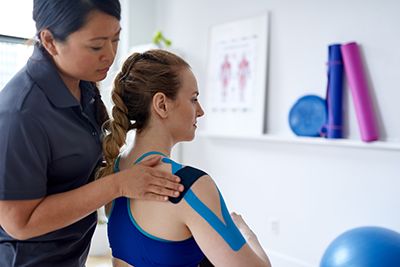
Soft tissue therapy is the manual manipulation of the musculoskeletal system. It includes techniques such as deep pressure or direct application of massage to the soft tissue, acupuncture, dry needling, cupping, or the use of pressure points along defined energy meridians. 3 Practitioners working in this field may hold a range of professional titles, including soft tissue therapist, massage therapist, or myotherapist.
Physical therapists working in high performance sport have a good understanding of athlete capacity and load and can help coaches to increase training availability and reduce injury risk. 1
Physical therapy in sport and exercise
Physical therapy practitioners support athletes and participants across the sport and active recreation sector, primarily through injury prevention, rehabilitation, and performance optimisation. 4
Physical therapy practitioners perform a broad range of tasks that contribute to individual and/or team sport performances. This can include: 1, 4
- Working with other performance support practitioners and coaches in the daily performance environment to optimise athlete availability.
- Injury reporting and surveillance.
- Supporting the development and implementation of rehabilitation and return to play plans.
- Travelling with athletes to domestic and international camps or competitions.
- Assisting with the implementation and delivery of performance recovery strategies.
- Conducting applied research.
Groups, societies and professional bodies
There are a range of organisations that support the professional needs of physiotherapists and soft tissue therapists. These organisations offer registration and regulation, professional standards, advocacy, professional development, continuing education, and/or networking opportunities.
Physiotherapy organisations
Australian Health Practitioner Registration Agency, opens in a new tab (AHPRA) includes a Physiotherapy Board who support safe practice by publishing regulatory standards, codes, guidelines, updates and other resources for physiotherapists, students, and the public.
Australian Physiotherapy Association, opens in a new tab (APA) is the peak body representing the interests of Australian physiotherapists and their patients.
- APA Physiotherapy Competence Framework, opens in a new tab provides relevant knowledge and skills to support physiotherapists with career progression and inform professional development needs across the range of areas which physiotherapists work.
Soft tissue therapy organisations
Association of Massage Therapists, opens in a new tab is a not-for-profit membership association dedicated to the advancement of the massage therapy profession within Australia’s healthcare system.
Australian Natural Therapies Association, opens in a new tab is the leading professional association for natural medicine practitioners in Australia.
Australian Traditional Medicine Society, opens in a new tab is Australia’s largest multi-modality national professional association, actively advocating for the collective interests of natural medicine practitioners across the country.
Massage & Myotherapy Australia, opens in a new tab is a not-for-profit membership organisation, who are the leading representative body for massage, remedial massage and myotherapists nationwide.
Massage Association of Australia, opens in a new tab is a membership association that aims to advance and promote the massage and manual therapies profession.
Myotherapy Association of Australia, opens in a new tab is a membership association for myotherapists, students, and allied health providers seeking professional development opportunities relating to myotherapy.
Vocational education and training
The path to becoming a physiotherapist or a soft tissue therapist in the sport sector differs considerably.
Within the Australian high performance sport system workforce, most physiotherapists and soft tissue therapists are engaged in contract roles, and/or for specific camps or competitions rather than embedded in permanent, full time positions. As a result, many practitioners balance work in high performance sport with private practice. 5, 6
A series of Performance Support Success Profiles have been developed to guide Australian high performance sport organisations in the recruitment, development and retention of practitioners in various roles and disciplines, including physiotherapists. Each success profile details the key factors across knowledge, experience, competencies and personal attributes that are associated with successful job performance.
Physiotherapy
To become a physiotherapist you require a degree (Bachelor or Master) in Physiotherapy and current registration with AHPRA. Physiotherapists working in the Australian high performance system are expected to hold a Masters of Sports and Exercise Physiotherapy (or equivalent) or be an APA-titled Sports and Exercise Physiotherapist. 6, 7
Soft tissue therapy
Soft tissue therapists can become accredited with one of six professional associations in Australia. According to a review of soft tissue therapists in the Australian high performance sport system, the most common was through Massage & Myotherapy Australia. 5
Standards
The Australian Performance Support Practitioner Minimum Standards represent the minimum standards for Performance Support staff and contractors engaged to deliver professional services in identified practice disciplines by National Sporting Organisations (NSOs), National Institute Network (NIN) partners, the Australian Olympic Committee, Paralympics Australia, and Commonwealth Games Australia. These standards, along with the AIS Sport Science Sport Medicine Best Practice Principles are a recommendation within the National Integrity Framework, opens in a new tab.
Physiotherapy standards
Professional qualifications:
- Bachelor of Physiotherapy or equivalent
Professional accreditations:
- AHPRA registration as a Physiotherapist
Soft tissue therapy standards
Professional qualifications:
- Diploma of Remedial Massage
Professional accreditations:
Practitioner-level membership with one of the following:
- Association of Massage Therapists
- Australian Natural Therapies Association
- Australian Traditional-Medicine Society
- Massage & Myotherapy Australia
- Massage Association of Australia
- Myotherapy Association of Australia
Research and resources
- National Institute Network Research. Recently published sports science/sports medicine research from NIN researchers. This list is updated on a monthly basis.
- Evidence-based position statements and best practice guidelines, Australian Institute of Sport, (accessed 5 June 2026). The Australian Institute of Sport develops evidence-based position statements on new and complex topics in sports science and sports medicine. Examples include:
- Physical therapy handover, Australian Sports Commission, (2022). A document to support providers, national sporting organisations, and national institute networks with optimising athlete transitions between daily performance and national team environments.
- Engagement of physical therapies providers on a short-term basis via a service agreement/contractor agreement, Australian Sports Commission, (2022). Guidelines to support national sporting organisations and national institute networks with engaging physiotherapists and soft tissue therapists, including recruitment standards, role responsibilities and scope of practice, induction and onboarding processes, fostering the coach/practitioner relationship, planning for critical incidents, and post-event reporting and feedback.
Journals and databases
- Archives of Physical Medicine and Rehabilitation, opens in a new tab publishes original, peer-reviewed research and clinical reports on important trends and developments in physical medicine and rehabilitation and related fields.
- British Journal of Sports Medicine, opens in a new tab is the leading, peer-reviewed journal in sports medicine, with additional multimedia resources.
- Cochrane Reviews, opens in a new tab are systematic reviews of primary research in human health care and health policy, and are internationally recognised as the highest standard in evidence-based health care.
- Journal of Back and Musculoskeletal Rehabilitation, opens in a new tab mainly focuses on presenting relevant information about the interdisciplinary approach to musculoskeletal rehabilitation for clinicians who treat patients with back and musculoskeletal pain complaints.
- Journal of Bodywork and Movement Therapies, opens in a new tab is a journal that handles therapeutic techniques and professional debate.
- Journal of Manual & Manipulative Therapy, opens in a new tab publishes original research, systematic reviews/meta-analyses of the literature and case reports that contribute to the advancement of knowledge in the field of musculoskeletal science, manipulative therapy, clinical research, and therapeutic practice.
- Journal of Orthopaedic and Sports Physical Therapy, opens in a new tab publishes scientifically rigorous, clinically relevant content for members of the health care community to advance musculoskeletal and sports-related practice globally.
- Journal of Physiotherapy, opens in a new tab is the official journal of the Australian Physiotherapy Association. The journal's mission is to publish the highest quality research with the most important impact for global physiotherapy practice.
- Journal of Science and Medicine in Sport, opens in a new tab is the official journal of Sports Medicine Australia, an international refereed research publication covering all aspects of sport science and medicine.
- Journal of Sport Rehabilitation, opens in a new tab is an international, peer-reviewed journal that promotes multidisciplinary evidence-based approaches to advancing rehabilitation for athletes and physically active people.
- Journal of Sports Medicine and Physical Fitness, opens in a new tab aims to promote the diffusion of original investigations and scientific innovations in the broad spectrum of science applied to physical activity, exercise, and participation in sport.
- Journal of Sports Science and Medicine, opens in a new tab is an open-access, nonprofit scientific electronic journal, publishing research and case studies, and review article in the fields of sports medicine and exercise sciences.
- Medicine and Science in Sports and Exercise, opens in a new tab features original investigations, clinical studies, and comprehensive reviews on current topics in sports medicine and exercise science.
- Musculoskeletal Science & Practice, opens in a new tab is a journal of musculoskeletal physiotherapy that aims to improve the clinical understanding of appropriate care processes for musculoskeletal disorders.
- PEDro, opens in a new tab is a free, physiotherapy evidence database of over 68,000 trials, reviews and guidelines evaluating physiotherapy interventions.
- Physical therapy and rehabilitation, opens in a new tab engages and inspires an international readership on topics related to physical therapy and rehabilitation.
- Sports Medicine, opens in a new tab focuses on definitive and comprehensive review articles that interpret and evaluate the current literature to provide the rationale for, and application of, research findings.
Videos
* Licencing restrictions apply to some resources.
- Lead Physiotherapists Network Day, Australian Institute of Sport, Canberra, (6 November 2025).
- Physiotherapist Network Day, Australian Institute of Sport, Canberra, (29 October 2024).
- Lead Physiotherapist Network Workshop, Gold Coast, Queensland, (12 October 2022).
Explore additional conferences, presentations, and webinars in the Clearinghouse video collection.
Network resources
Networks are a useful way for organisations, committees and both formal and informal working groups to connect, share ideas and exchange knowledge and resources—either openly or through secure channels—to support the development of sport.
Some resources could require login or membership and may be restricted to those working in the Australian sport sector due to licensing, copyright or privacy conditions. If you think you should have access, please contact us.
- Restricted
Domestic Physiotherapy and Soft Tissue Therapy Network Database
Database of physiotherapists and soft tissue therapists that have high performance sports experience. - Restricted
International Medical and Physical Therapies Network Database
Established to centralise information relating to international clinicians. - Open Access
Performance Health
Aims to provide Australian athletes a competitive advantage through optimised health. - Restricted
Para Physio Network & HP Team Carers Workshop
Workshop aimed at advancing physiotherapy practice in para sport by aligning clinicians with world-leading athlete-centred approaches.
REFERENCES
- Physical Therapy Handover: Considerations for successful athlete transition between daily performance and national team environments, Australian Sports Commission, (2022).
- Physiotherapy, opens in a new tab, Allied Health Professions Australia, (accessed 11 June 2026).
- What is Massage and Myotherapy?, opens in a new tab Massage and Myotherapy Australia, (accessed 19 June 2026).
- Sports and Exercise, opens in a new tab, Australian Physiotherapy Association, (accessed 5 June 2026).
- Soft Tissue Therapy Network in the High Performance Sport System: A workforce mapping review, Australian Sports Commission, (2025).
- Physiotherapy Network in the High Performance Sport System: A workforce mapping review, Australian Sports Commission, (2025).
- Australian Performance Support Practitioner High Performance Expectations, Australian Sports Commission, (2024).
Related topics
Last updated: 9 July 2026 Content disclaimer: See Clearinghouse for Sport disclaimer
Is this information complete? The Clearinghouse for Sport is a sector-wide knowledge sharing initiative, and as such your contributions are encouraged and appreciated. If you would like to suggest a resource, submit a publication, or provide feedback on this topic, please contact us.