Women in high performance coaching
Understanding the strategies and evidence-based frameworks that support women in high performance coaching
Women play a vital role in the success and future of high performance sport. Increasing the diversity of coaching environments strengthens performance, fosters innovation, and creates better outcomes for coaches, athletes and teams.
Increasing the participation, visibility and progression of women in coaching is a key priority of Australia’s High Performance 2032+ Sport Strategy (Win Well Strategy) and Australia's High Performance Coach Development Strategy. Achieving this requires addressing barriers to advancement, creating inclusive environments, and supporting clear pathways for women to develop and thrive throughout their coaching careers.
The Women in High Performance Coaching (WiHPC) Project is an initiative of the Australian Sports Commission that supports the progression and advancement of women in high performance coaching. Key focus areas include:
- Increase representation – Grow the number and visibility of women in high performance coaching roles.
- Remove barriers – Address cultural, structural and systemic challenges that impact career progression and retention.
- Create sustainable pathways – Support development through mentoring, leadership opportunities, professional networks and flexible career pathways.
The Women in High Performance Coaching (WiHPC) Project is driving system-wide change to increase the representation, retention and visibility of women in high performance coaching across Australia's high performance sport system.
Representation - 2025
As at September 2025, women represent 27% of head coaches across all high performance sports, including: 1

The proportion of women head coaches in high performance funded sports has nearly tripled, increasing from 9.7% in October 2022 to 26.3% in September 2025. 1
Women’s representation among head coaches at major international games has increased over recent Games cycles. 1 The data below shows representation at the most recent major multi-sport Games.
The gender gap in high performance coaching
The Australian high performance coaching workforce remains significantly underrepresented by women, particularly in senior and head coaching roles, due to a range of factors.
A shrinking talent pipeline Evidence from current and former coaches indicates women leave the high performance sport system at various stages of their coaching careers. These departures reduce the number of women progressing through the coaching pathway, contributing to a persistent gender gap in leadership and head coaching positions. 2
Structural and career barriers The high performance coaching environment is characterised by complex career pathways, demanding work requirements, limited job security, and systemic barriers that disproportionately affect women. These factors can make it difficult to enter, progress within, and remain in high performance coaching roles over time. 2
Lost expertise and experience When women leave the high performance sport system, valuable coaching capability, experience, and leadership are lost. This creates a hidden pool of qualified coaches whose skills and expertise are no longer contributing to the system. 2
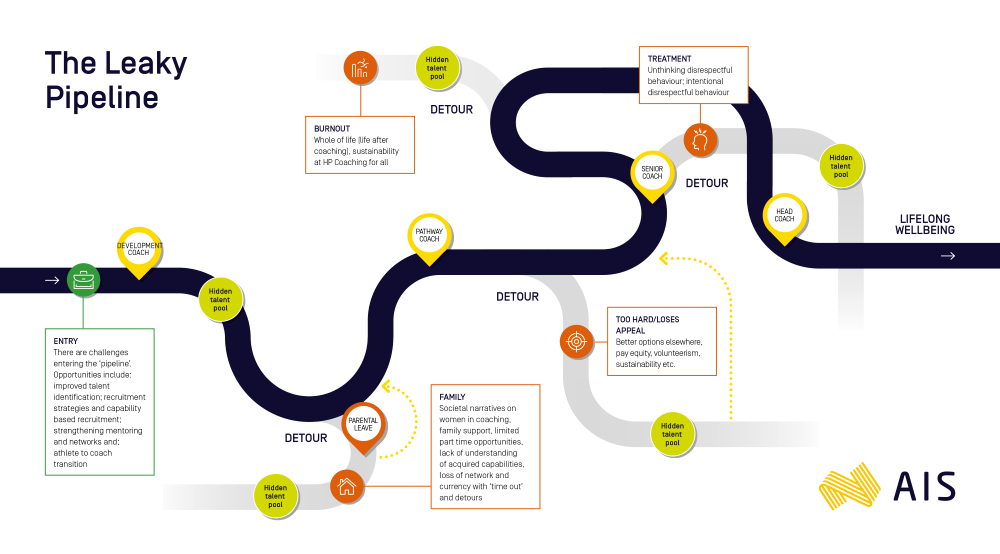
- The leaky pipeline[PDF • 1.15 mb]
Without addressing the factors that drive women out of high performance coaching, the sector will continue to experience talent loss, reduced diversity in leadership, and slow progress towards gender equity in coaching. 2
Factors that impact
A range of cultural, structural, and behavioural factors continue to influence the participation, retention, and progression of women in high performance coaching. These include workplace bias, microaggressions, harassment, organisational inaction, and a lack of accountability for inclusive behaviours. Together, these factors create barriers to advancement, limit opportunities, and reduce the likelihood that women will enter, remain in, and thrive in coaching roles. 1
Driving change
The Four Strategic Levers of Change is a model developed through the Women in High Performance Coaching Project to address the structural and career barriers faced by women in high performance coaching. 1
The model identifies four areas where targeted action and investment can strengthen the representation, retention, and experiences of women coaches in high performance sport.
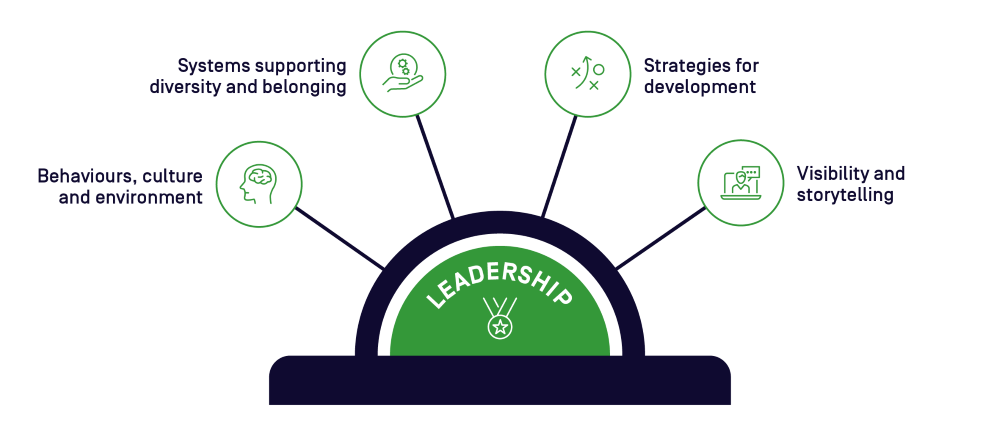
- The Four Strategic Levers of Change[PNG • 75.91 kb]
The National Talent Development Framework for Women Coaches
The National Talent Development Framework for Women Coaches provides a structured pathway to increase participation, build capability, and support progression at all career stages. It promotes targeted development opportunities, strengthens connections and networks, and supports career transitions and retention to foster a sustainable pipeline of coaching talent. 1
Coaching career lifecycle intervention points
Different strategies are needed at different stages of the coaching career pathway (for example, development coach vs. head coach) to recruit, enhance, and retain coaches. 1
Definitions 1
- Development coach: An early career performance coach learning the craft of competitive coaching, aspiring to become high performance coach.
- Performance pathway coach: A coach actively coaching within the performance pathway and building/enhancing my high performance experiences.
- Senior high performance coach: An established high performance coach who has coaching experience at national and international competitions.
- Head coach: An experienced and successful coach with a proven track record who leads a program/team.
- Transition coach: A high performance coach seeking to transition into an alternative role within the high performance ecosystem.
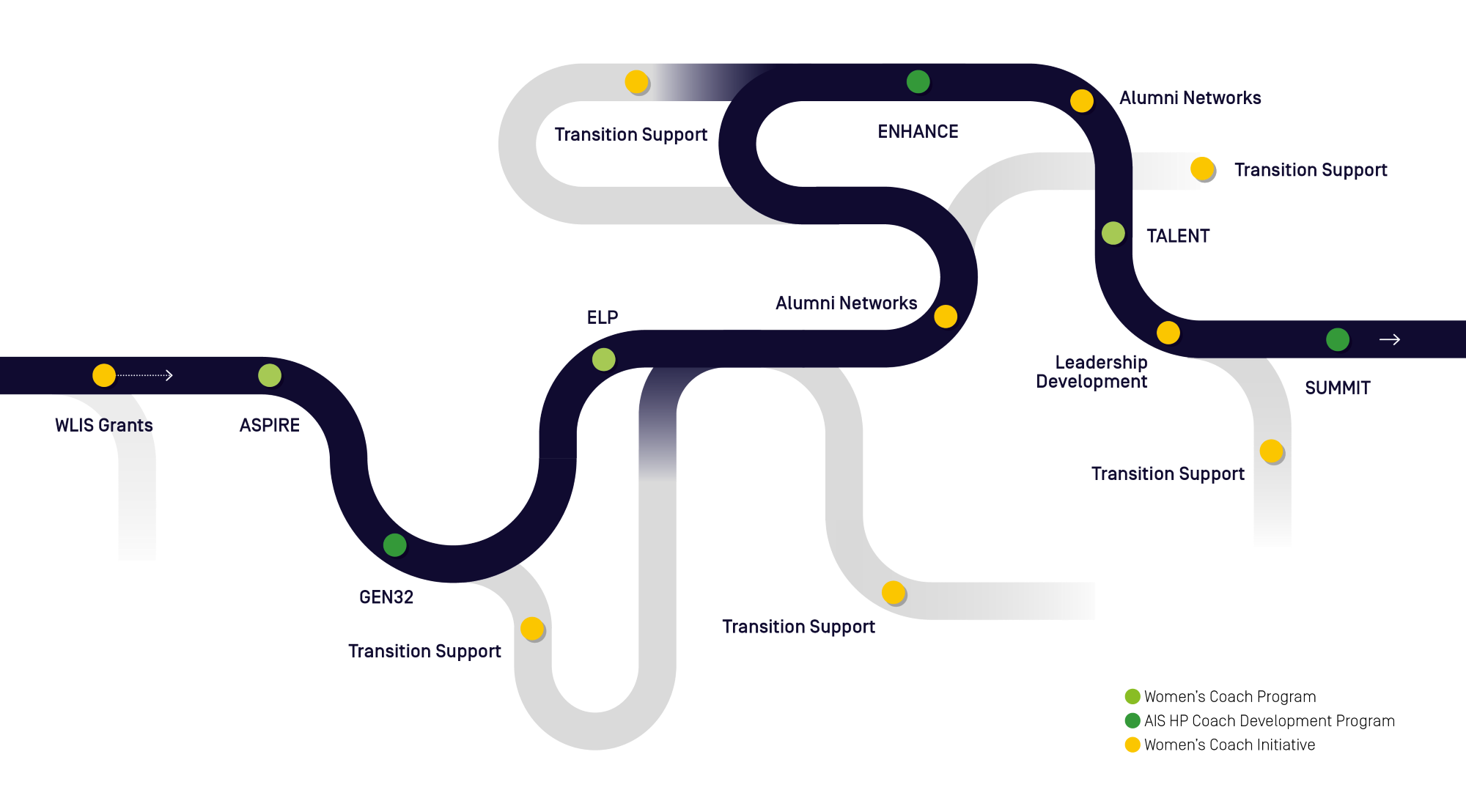
- Interventions and programs[PDF • 117.39 kb]
REFERENCES
- Women in high performance coaching: A four year journey and next steps 2021-2025, Australian Institute of Sport, (July 2026)
- Women in high performance coaching: fixing the leaky pipeline action plan (2023), Australian Institute of Sport, (2023)
- Women in high performance coaching: Talent development framework, Australian Institute of Sport
See more on this topic:
- Overview
- Benefits of Sport
- Factors influencing participation
- Equity
- High performance coaching
- Policies, programs, and supporting structures
- Awards and recognition
Last updated: 17 July 2026 Content disclaimer: See Clearinghouse for Sport disclaimer
Is this information complete? The Clearinghouse for Sport is a sector-wide knowledge sharing initiative, and as such your contributions are encouraged and appreciated. If you would like to suggest a resource, submit a publication, or provide feedback on this topic, please contact us.